Consult


2 min read
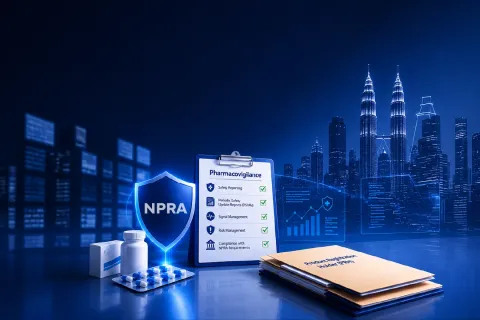
Over the counter (OTC) medicines are a crucial part of Malaysia’s healthcare ecosystem, providing consumers with safe, effective, and easily accessible treatment options. However, before these products reach the market, they must comply with the stringent Regulatory requirements established by the National Pharmaceutical Regulatory Agency (NPRA) and the Drug Control Authority (DCA).
For companies aiming to enter the Malaysian market, understanding the OTC Registration Malaysia process — including documentation, compliance, and submission procedures — is essential to ensure smooth and timely approvals.
OTC Registration Malaysia: Essential Regulatory Criteria
1. Registration Obligation
All OTC medicines must be registered with the Drug Control Authority (DCA) before importation, distribution, or sale in Malaysia. Unregistered products are strictly prohibited in the market.
2. Who Can Apply
Foreign manufacturers must appoint a local Malaysian agent as the Product Registration Holder (PRH), responsible for submissions, NPRA communication, and post-approval activities.
3. Product Categories
OTC products are classified as “pharmaceutical products containing non-scheduled poisons.” Common examples include medicated plasters, antiseptics, certain disinfectants, and diagnostic agents.
4. Labelling and Packaging
Product labels must display:
- Comply with the local labelling requirements
- The manufacturer’s name and address
- The registration holder’s details
- Optional halal certification logo (if approved by JAKIM or a recognized Islamic body). Any addition of a halal logo requires prior NPRA approval as a label variation.
5. Application Process via QUEST 3+
All OTC Registration applications must be submitted online through NPRA’s QUEST 3+ system, including product data, safety, efficacy, and quality documentation as per ASEAN Common Technical Dossier (ACTD) guidelines.
6. Timelines and Fees
The average evaluation timeline is approximately 210 working days, once all documents are complete. Importer and wholesaler license fees typically range between RM 500–RM 1000 per year.
7. Compliance and Quality Standards
OTC Malaysia products must adhere to:
- Control of Drugs and Cosmetics Regulations 1984
- Poisons Act 1952
- NPRA’s guidelines on safety, quality, and efficacy
8. Advertising Regulations
Only OTC products with a valid MAL registration number and product code “X” can be advertised publicly. Promotional materials must align with NPRA’s advertising guidelines to maintain ethical marketing standards.
Summary Table
No. | Criteria | Key Details |
| 1 | Registration Obligation | All OTC drugs must be registered with DCA before import, distribution, or sale. |
| 2 | Who Can Apply | Foreign firms must appoint a local PRH as NPRA contact. |
| 3 | Product Categories | Non-scheduled poisons (antiseptics, plasters, diagnostic agents). |
| 4 | Labelling & Packaging | Must include manufacturer & PRH details; halal logo requires NPRA approval. |
| 5 | Application Platform | Submitted via NPRA QUEST 3+ with complete ACTD documentation. |
| 6 | Timelines & Fees | ~210 working days; RM 500–1000/year for import or wholesale license. |
| 7 | Compliance Standards | Must meet NPRA, Poisons Act, and Cosmetics Regulations requirements. |
| 8 | Advertising Regulations | Only products with MAL number & “X” code can be promoted. |
Conclusion
Successfully managing OTC Registration Malaysia requires deep Regulatory understanding, meticulous dossier preparation, and adherence to NPRA’s compliance standards. From application submission to post-approval communication, every stage impacts product approval timelines.
With Freyr’s Regulatory expertise, pharmaceutical companies can streamline the OTC Registration process, meet NPRA’s evolving expectations, and accelerate safe, compliant market entry for OTC Malaysia products.