Consult


2 min read
Introduction
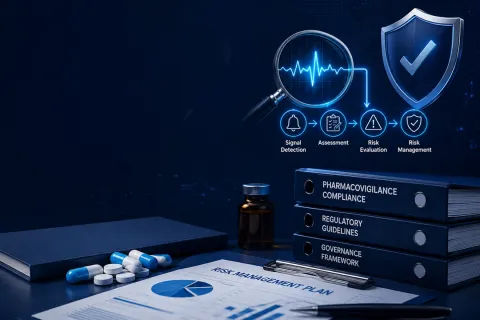
Pharmacovigilance in 2026 is entering a new phase of evolution. Increasing data volumes, advancing technologies, and heightened regulatory expectations are reshaping how organizations manage drug safety management. The traditional focus on compliance and reporting is shifting toward a more proactive and intelligence-driven approach.
Beyond Compliance: The New Role of PV
While core activities such as case processing and adverse event reporting remain essential, they are no longer sufficient on their own. Organizations are now expected to:
- Detect risks earlier through signal detection in pharmacovigilance
- Continuously evaluate benefit-risk profiles
- Respond to emerging risks in near real-time
This shift positions PV as a key pillar of regulatory strategy and patient safety.
Key Trends Shaping Pharmacovigilance in 2026
- 1. Automation of Case Processing
Automation in pharmacovigilance is transforming:
- Case intake and triage
- Data entry and coding
- Duplicate detection
This reduces manual workload and improves efficiency. However, outcomes depend heavily on data quality in pharmacovigilance.
- 2. Emphasis on Signal Detection
Signal detection in pharmacovigilance has become central to operations. Organizations are leveraging:
- Advanced analytics tools
- Continuous monitoring systems
This enables earlier identification of risks and faster intervention.
- 3. Integration of Real-World Data
Modern PV systems are incorporating real-world data in pharmacovigilance, including:
- Electronic health records
- Patient registries
- Post-market surveillance data
These insights strengthen decision-making and improve overall drug safety management.
- 4. Increased Regulatory Expectations
Health authorities are placing greater emphasis on:
- Risk Management Plans
- Periodic safety reports
- Data transparency and integrity
Organizations must ensure consistency to avoid regulatory compliance in pharmacovigilance risks.
Ongoing Challenges in PV Operations
Despite advancements, organizations continue to face:
- High manual workloads
- Fragmented systems
- Delays in signal detection in pharmacovigilance
- Inconsistent global reporting
These challenges often stem from lack of integration and standardized processes.
How Leading Organizations Are Evolving
- End-to-End Process Optimization: Leading teams are improving the full PV workflow, strengthening pharmacovigilance process optimization from intake to reporting.
- Focus on Data Quality and Governance: Organizations are investing in:
- Standardized coding practices
- Robust validation systems
- Strong governance frameworks
This ensures high data quality in pharmacovigilance, which is critical for accurate insights.
- Adoption of Predictive Analytics: Advanced analytics are being used to:
- Identify patterns in safety data
- Predict risks earlier
- Enable proactive decisions
This supports a more forward-looking drug safety management approach.
- Global Alignment and Consistency: Organizations are improving alignment across regions to strengthen regulatory compliance in pharmacovigilance and operational efficiency.
Building a Future-Ready PV Function
To strengthen capabilities in pharmacovigilance in 2026, organizations should focus on:
- Expanding automation in pharmacovigilance
- Strengthening signal detection in pharmacovigilance frameworks
- Improving data quality in pharmacovigilance
- Leveraging real-world data in pharmacovigilance
- Advancing pharmacovigilance process optimization
Conclusion
Pharmacovigilance in 2026 is evolving into a proactive, data-driven function central to drug safety management. Organizations that embrace technology, analytics, and strategic alignment will be better positioned to manage risks, ensure compliance, and improve patient safety outcomes.