Consult

Overview
Food, beverages, and supplements in the EU are governed by a harmonized framework designed to protect consumers and ensure fair trade. Oversight is shared between the European Commission, EFSA (European Food Safety Authority), and national authorities, covering classification, labeling, claims, and safety.
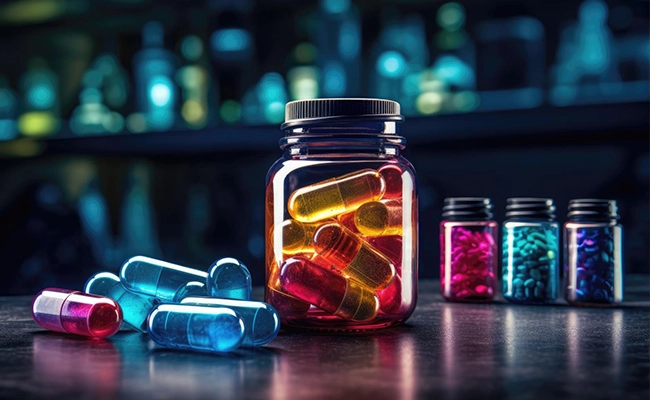
Understanding the Regulatory Framework for Food and Food Supplements in the EU
The EU applies a harmonized Regulatory framework to ensure consumer safety, fair trade, and transparency across food, beverages, and food supplements. Oversight is shared between:

European Commission
Issues authorizations, maintains registers of permitted substances, and enforces harmonized rules.

EFSA (European Food Safety Authority)
Provides scientific opinions on safety, nutrition, and health claims.

National Authorities
Manage notifications, labeling checks, and market surveillance at the member state level.
Product Categories Under EU Regulation
Within this framework, products are classified into clear categories, each governed by specific legislation and compliance requirements:

A. Food
- Defined under Regulation (EC) No 178/2002 (General Food Law) as any substance or product, whether processed, partially processed, or unprocessed, intended to be ingested by humans.
- Includes conventional foods, beverages, and food ingredients used for human consumption.
- Governed by rules on safety, hygiene, and traceability.

B. Beverages
- Covered under Regulation (EU) No 1169/2011 on food information to consumers.
- Must comply with labeling requirements (nutrition, allergens, language rules).
- Alcoholic beverages are additionally subject to sector-specific EU regulations, including rules for wine, spirit drinks, and aromatized wine products.

C. Food Supplements
- Defined in Directive 2002/46/EC as foodstuffs intended to supplement the normal diet, consisting of concentrated sources of nutrients or other substances with nutritional or physiological effect.
- Includes vitamins, minerals, amino acids, fatty acids, botanicals. Note: The regulatory status and use of microorganisms and related terminology may vary across member states.
- Subject to permitted lists and national notification requirements.

D. Novel Foods
- Defined in Regulation (EU) 2015/2283 as foods not consumed to a significant degree in the EU before May 15, 1997.
- Examples: Chia seeds (before approval), noni juice, CBD infused products, insect protein, emerging alternative protein sources.
- Require EFSA risk assessment and European Commission authorization before market entry.
Key Regulations at a Glance
EU food, beverage, and supplement compliance is anchored in a set of harmonized regulations that define safety, labeling, and claims requirements.
Regulation | Scope | Key Focus |
|---|---|---|
| Regulation (EC) No 178/2002 | General Food Law | Food safety, risk analysis, traceability |
| Directive 2002/46/EC | Food Supplements | Permitted vitamins, minerals, and sources |
| Regulation (EU) 2015/2283 | Novel Foods | EFSA review, Commission authorization |
| Regulation (EC) No 1924/2006 | Nutrition & Health Claims | Authorized, substantiated claims only |
| Regulation (EU) No 1169/2011 | Food Information | Labeling, allergens, nutrition, and language rules |
| Regulation (EC) No 1333/2008 | Food Additives | Safety, technological need, maximum levels |
| Regulation (EC) No 1334/2008 | Flavorings | Safe use, EU positive list, labeling rules |
| Regulation (EC) No 1925/2006 | Addition of vitamins and minerals and certain other substances to foods | Permitted sources, prohibited/restricted substances, EFSA safety review |
| Regulation (EU) No 609/2013 | Foods for Specific Groups | Composition, labeling, permitted substances, protection of vulnerable groups |
Ingredient & Safety Requirements
Ingredient compliance is the first gate to EU market entry.

Vitamins & Minerals
Must align with Directive 2002/46/EC permitted lists.

Botanicals
Subject to member states, due to the absence of EU-wide harmonization; stricter rules in France and Italy.

Probiotics
Certain microorganisms may require novel food assessment where a significant history of consumption in the EU prior to 15 May 1997 cannot be demonstrated.

Novel Foods
Require EFSA risk assessment and Commission approval.

Food & Beverage Additives
Must comply with Regulation (EC) No 1333/2008 on food additives and Regulation (EC) No 1334/2008 on flavorings.
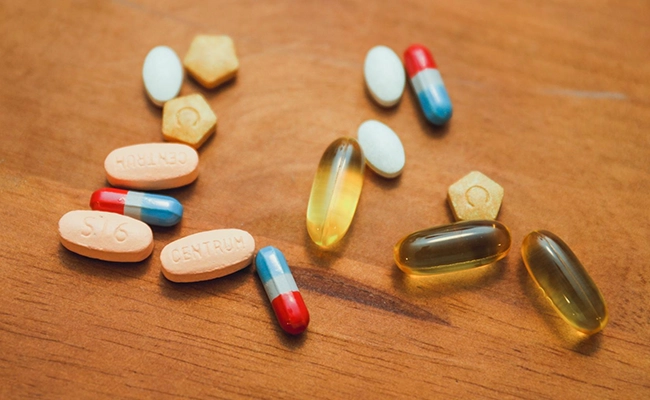
Special Regulatory Categories: Foods for Specific Groups (FSG)
Unlike most food products, which do not require notification, Foods for Specific Groups (FSG) are subject to stricter oversight. These products are regulated under Regulation (EU) No 609/2013, which sets specific compositional and labeling rules to protect vulnerable populations.
Categories of FSG:
- Infant formula & follow‑on formula — Must comply with detailed nutritional composition and labeling requirements.
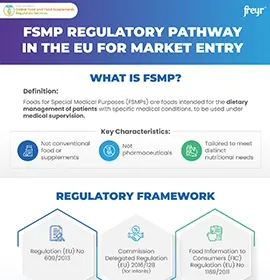
- Foods for Special Medical Purposes (FSMP) — Intended for patients with medically determined nutritional needs; require strict authorization and monitoring.
- Total diet replacement products — Used for weight control; subject to compositional limits and labeling rules.
Registration vs Notification in the EU
| Aspect | Notification | Registration |
|---|---|---|
| Scope | Applies to most food supplements, standard foods, and beverages | Required for novel foods or products containing non‑authorized ingredients |
| Authority | National authorities (e.g., Italy’s Ministry of Health, Germany’s BVL) | EFSA conducts scientific review; European Commission grants authorization |
| Process | Submission of product details (composition, labeling, claims) for compliance check | Formal dossier submission → EFSA scientific opinion → Commission authorization |
| Timeline | Typically, two (2) – four (4) months | Often 12 – 18 months, depending on EFSA review |
| Outcome | No formal approval; products are logged and monitored | Formal authorization required before market entry |
EU Compliance Pathways
Notification
(Food, Beverages, Supplements)
01
Step 1: Classification
Confirm product type (food, beverage, Supplements).
02
Step 2: Ingredient Check
Verify vitamins, minerals, botanicals against permitted lists.
03
Step 3: Authority Notification
Submit product details (composition, labeling, claims) to national authority.
04
Step 4: Labeling Compliance
Ensure packaging meets Regulation (EU) No 1169/2011 and claims align with Regulation (EC) No 1924/2006.
05
Step 5: Market Entry
Products are logged and monitored, but no formal approval is issued.
Registration
(Novel Foods)
01
Step 1: Status Check
Determine if the ingredient is listed in the EU Novel Food Catalogue.
02
Step 2: EFSA Dossier
Prepare a scientific dossier with safety, nutrition, and intended use data.
03
Step 3: EFSA Review
EFSA conducts risk assessment and issues a scientific opinion.
04
Step 4: Commission Authorization
European Commission decides on approval and adds product to the Union List of Novel Foods.
05
Step 5: Market Entry
Authorized products enter the EU market with labeling and monitoring obligations.
Country‑Specific Compliance Variations
EU law is harmonized, but member states enforce local rules that impact timelines.
| Country | Requirement |
|---|---|
| Italy | Notification required before market entry |
| Germany | Notification to the Federal Office of Consumer Protection and Food Safety (BVL) |
| France | Strict botanical rules; additional checks |
| Spain | Beverage labeling must include specific allergen warnings |
| Poland | Supplements must be notified to the Chief Sanitary Inspectorate (GIS) before market entry; labeling must comply with Polish language requirements |
Post‑Brexit Considerations
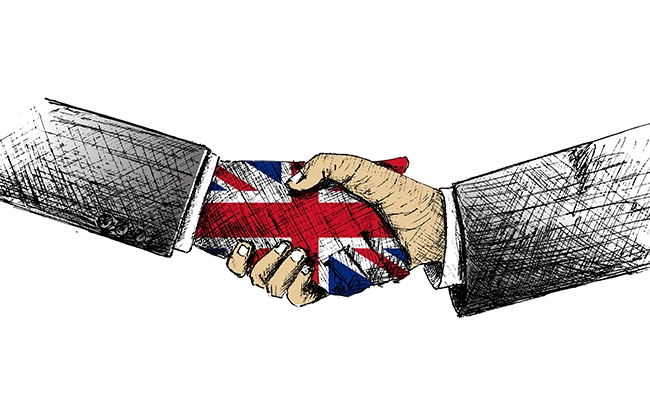
Following Brexit, the UK operates under its own framework, separate from EU law.
- EU Pathway: Non‑EU companies must appoint an EU Food Business Operator (FBO) or importer, as applicable.
- UK Pathway: Non‑UK companies must appoint a UK‑based representative for Food Standards Agency (FSA) submissions.
- Impact: Dual submissions, separate timelines, and mandatory representation increase compliance costs and extend market entry.
How Can Freyr Help?
Food Product Classification/Food Supplements Classification.

Formula Review/Ingredients Assessment.

Safety Assessment of Finished Products/Food Ingredients.

Label and Claims Review.

Nutritional and Health Claims Consultation and Substantiation.

NHCR Claims Application (EU Register on Nutrition and Health Claims).

Environmental Labeling/Recycling Labeling Review and Review of Green Claims.

Packaging Material Requirements.

Dossier Gap Analysis.

Dossier Compilation and Submission.

Product Compliance.

Product Notification/Food Supplements Registration Europe.

EU Country-specific Regulatory Support.

Regulatory Strategy for the EU.

EU Legal Representation (LR)/ Local representative for EU Supplements registration.

Regulatory Intelligence (RI) Report.

Product-specific updates on the Regulatory Guidelines/Standards.

Novel Food Registration/ Novel Food Authorization Request/Traditional Food from a Third Country Registration.

Consultation Processes for Determining a Food Ingredient's Status (novel/not novel).

Regulatory Guidance on Food Products/Food Supplements Import Services in the EU.

Translation Support.

Review of Advertising Promotional Material.

Food Surveillance and Vigilance.
Post-notification/Post-market surveillance.

Management of Alerts and Authorities’ Remarks.

FBO Registration Support.

Communication with Health Authorities (HAs).

Supplements Compliance for European Economic Area Countries Outside the EU (Switzerland, Norway, and Iceland).

End-to-end Services for Fortified Foods, Food for Special Medical Purposes (FSMP), Infant Formula, Follow-on Formula, and other Foods for Specific Groups (FSG).
Why Choose Freyr?

End-to-end Regulatory consultation for food regulations in the EU

Market-specific Regulatory consulting and advice.

Harmonized compliance, local labeling, and local market support.

Qualified team of experts with hands-on experience across all categories of foods.

Support for region-specific Regulatory activities.

Extensive partner network across the globe.

A strong relationship with various Health Authorities.
Navigate EU Regulations with Ease
Cut through complexity with clear, compliant pathways.
Frequently Asked Questions (FAQs)
Clear answers to common queries on the EU’s food and food Supplements registration process, designed to help you navigate compliance with confidence.
01. What are the EU requirements for food supplement notification?
Food supplements must comply with Directive 2002/46/EC and applicable national requirements, including notification procedures where implemented by member states.
02. How does EFSA evaluate health claims for supplements?
The European Food Safety Authority reviews scientific evidence; only approved claims can appear on labels and marketing.
03. What is the EU Novel Foods regulation?
Foods not widely consumed before May 1997 need pre market authorization under Regulation (EU) 2015/2283.
04. Do I need an EU Responsible Person for compliance?
Yes, non EU companies must appoint a representative to manage Regulatory communication and ensure compliance.
05. What are the EU labeling rules for food supplements?
Labels must include nutrient amounts, recommended daily intake, warnings, and avoid unauthorized health claims.
06. How long does EU food supplement registration take?
Timelines vary by product and member state, typically ranging from a few weeks to several months.
07. What is the difference between EU and UK supplement regulations?
Post Brexit, the UK follows its own notification and claims process, separate from EU rules.
08. Are additives and excipients regulated in EU supplements?
Yes, only additives listed in Regulation (EC) No 1333/2008 are permitted, with strict safety assessments.
09. What penalties apply for non compliance in the EU?
Products may be withdrawn, fines imposed, and companies barred from market entry until compliance is achieved.
10. What technical documentation is required for approval?
Dossiers must include composition, manufacturing details, stability data, toxicology, and claim substantiation.