Consult

What Are Dietary Supplements and Why Does Compliance Matter?
Dietary supplements are products intended to supplement the normal diet by providing nutrients or other substances with nutritional or physiological benefits. Depending on the market, dietary supplements may contain vitamins, minerals, amino acids, botanical ingredients, probiotics, enzymes, proteins, or other bioactive substances.
These products are commonly marketed in dosage forms such as:

Tablets

Capsules

Softgels

Powders

Gummies

Liquids

Sachets, etc.
While dietary supplements serve similar consumer needs globally, their regulatory classification varies significantly across jurisdictions. Products marketed as dietary supplements in one country may be regulated as food supplements, natural health products, complementary medicines, or functional foods in another.
As a result, companies must navigate market-specific requirements related to product classification, ingredients, labeling, claims, manufacturing standards, registration, and post-market compliance. A proactive regulatory strategy is essential to support efficient market access and long-term compliance across global markets.
Need help determining the regulatory pathway for your dietary supplement?
Dietary Supplement Categories We Support
Freyr supports regulatory compliance and market access for a broad range of dietary supplement products.

Vitamins & Mineral Supplements
Products formulated with essential vitamins and minerals intended to supplement dietary intake and support nutritional well-being.

Supplements Containing Botanicals
Products containing plant-derived ingredients, extracts, traditional botanicals, and naturally sourced bioactive compounds.

Sports Nutrition Products and Food for Special Dietary Use
Sports nutrition products designed to support athletic performance, endurance, muscle recovery, hydration, and overall fitness goals. FSDU includes the food that helps in weight management, and food prepared for other physiological conditions.

Probiotics, Prebiotics & Postbiotics
Products formulated to support digestive health, microbiome balance, and overall wellness.

Protein & Specialty Nutrition Products
Protein supplements, amino acid products, meal replacements, and specialized nutritional formulations.

Functional Health Supplements
Products developed to support targeted health and wellness objectives through specific nutritional or physiological benefits.
Navigating Global Dietary Supplement Regulations
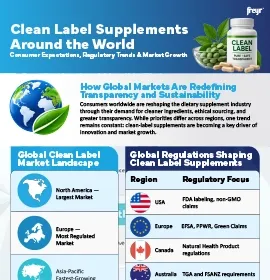
Dietary supplement regulations vary significantly across jurisdictions, influencing product classification, ingredient acceptance, labeling requirements, claims, registration pathways, and ongoing compliance obligations. Companies pursuing international growth must understand how these differences impact commercialization strategies, product development decisions, and market-entry timelines.

United States (US)
United States
The United States remains one of the world's largest dietary supplement markets, but companies must carefully address requirements related to ingredient safety, labeling compliance, permissible claims, and manufacturing controls. Under FDA regulations for dietary supplements, Organizations introducing innovative formulations must also evaluate New Dietary Ingredient (NDI) considerations and applicable regulatory obligations before commercialization.

European Union (EU)
European Union
The European Union's (EU) dietary supplement regulations require companies to navigate both harmonized legislation and country-specific implementation requirements. Ingredient compliance, nutrition and health claims, labeling obligations, and novel ingredient considerations can all influence market-entry strategies and product positioning across Member States.

Canada
Canada
Many dietary supplement products in Canada fall within the Natural Health Product (NHP) framework, which may require product licensing, claim substantiation, ingredient assessments, and specific labeling considerations. Understanding these requirements early can help support a more efficient path to commercialization.
Explore our Canada Natural Health Product Compliance Services

Asia-Pacific (APAC)
Asia-Pacific
The Asia-Pacific region encompasses some of the world's fastest-growing dietary supplement markets, each governed by distinct regulatory frameworks for product classification, ingredient compliance, labeling, claims, registration, and market authorization. Successfully commercializing products across APAC requires a thorough understanding of country-specific requirements and evolving regulatory expectations.
Freyr supports dietary supplement compliance and market access across key APAC markets, including Singapore, Malaysia, Indonesia, Thailand, Vietnam, the Philippines, China, Hong Kong, South Korea, Japan, India, Australia, and New Zealand.

Latin America, Middle East & Africa
Emerging Markets
Emerging markets across Latin America, the Middle East, and Africa continue to present significant growth opportunities for dietary supplement companies. However, organizations must navigate varying requirements related to product registrations, ingredient compliance, labeling, claims, import procedures, and local representation.
Freyr supports market access and compliance initiatives across key markets in these regions, helping organizations address regulatory complexities and expand into new markets with confidence.
Explore our Global Dietary Supplements Market Access Services
Global Dietary Supplement Registration and Oversight
| Country | Registration/Notification | Key Enforcement Body |
|---|---|---|
| United States | NA | DSHEA (Dietary Supplement Health and Education Act of 1994) under Food and Drug Administration (FDA) |
| European Union | depends on single state | European Food Safety Authority (EFSA) & Member State Authorities |
| India | NA (Site license is mandatory for all food products, and product approval for Novel Food and NSF) | Food Safety and Standards Authority of India (FSSAI) |
| Canada | Registration | Health Canada (Natural and Non-prescription Health Products Directorate) |
| Australia | Both applicable | Therapeutic Goods Administration (TGA) |
| New Zealand | NA | Ministry for Primary Industries (MPI) / Medsafe |
| China | Filing or Registration | State Administration for Market Regulation (SAMR) |
| Singapore | NA | Health Sciences Authority (HSA) |
| Malaysia | Registration | National Pharmaceutical Regulatory Agency (NPRA) |
| Indonesia | Registration | National Agency of Drug and Food Control (BPOM) |
| Thailand | Registration | Thai Food and Drug Administration (FDA) |
| Vietnam | Registration | Vietnam Food Administration (VFA) under Ministry of Health |
| Philippines | Registration | Food and Drug Administration (FDA Philippines) |
| South Korea | Registration | Ministry of Food and Drug Safety (MFDS) |
| Japan | NA but for FCC- notification is required and FOSHU- government approval is required | Consumer Affairs Agency (CAA) & MHLW |
Regulatory requirements continue to evolve and may vary based on product composition, intended use, ingredients, and claims. Companies should assess applicable obligations before commercialization.
Key Regulatory Challenges for Dietary Supplement Companies
As regulatory expectations continue to evolve, manufacturers and brand owners frequently encounter challenges such as:
01Differing product classifications across jurisdictions
02Variations in permitted ingredients and dosage limits
03Complex registration and notification requirements
04Market-specific labeling and claims restrictions
05Evolving regulatory requirements and guidance
06Managing compliance across multiple countries simultaneously
07Maintaining registrations and product portfolios throughout the lifecycle
A proactive regulatory strategy can help reduce compliance risks, support faster market entry, and improve long-term regulatory readiness.
Overcome regulatory barriers before they delay your launch.
Dietary Supplement Regulatory Compliance Services
Successfully commercializing dietary supplements requires regulatory oversight at every stage, from product development and market-entry planning to registration, labeling, and post-market compliance. Freyr provides integrated regulatory support that helps organizations navigate evolving dietary supplement regulations while accelerating global market access.
Product Development & Regulatory Assessment
Regulatory considerations often begin long before a product reaches the market. Early evaluation of ingredients, intended use, claims, and target markets can help identify potential compliance risks and reduce delays later in the development process.
Freyr supports companies with:
![Tablets]() Ingredient permissibility reviews
Ingredient permissibility reviews![Tablets]() Formula compliance evaluations
Formula compliance evaluations![Tablets]() Raw materials evaluations
Raw materials evaluations![Tablets]() Product classification assessments
Product classification assessments![Tablets]() Regulatory pathway determination
Regulatory pathway determination![Tablets]() Novel ingredient assessments
Novel ingredient assessments![Tablets]() Regulatory gap analyses
Regulatory gap analyses

B

Labeling, Claims & Artwork Compliance
Labeling and claims remain among the most frequently scrutinized aspects of dietary supplement compliance. Requirements often vary significantly across markets, making careful review essential before product launch.
Our support includes:
![Tablets]() Label compliance assessments
Label compliance assessments![Tablets]() Nutrition and health claim reviews
Nutrition and health claim reviews![Tablets]() Structure-function claim evaluations
Structure-function claim evaluations![Tablets]() Packaging artwork reviews
Packaging artwork reviews![Tablets]() Promotional material assessments
Promotional material assessments![Tablets]() Market-specific labeling adaptations
Market-specific labeling adaptations
C

Registration & Market Entry
Many markets require product registrations, notifications, licenses, or other pre-market activities before commercialization. Navigating these requirements efficiently is critical to achieving timely market access.
Freyr assists organizations with:
![Tablets]() Registration strategy development
Registration strategy development![Tablets]() Dossier preparation and submission support
Dossier preparation and submission support![Tablets]() Product notifications and registrations
Product notifications and registrations![Tablets]() Regulatory authority interactions
Regulatory authority interactions![Tablets]() Deficiency response management
Deficiency response management![Tablets]() Multi-country market-entry planning
Multi-country market-entry planning
D

Global Compliance & Portfolio Management
As product portfolios expand across multiple markets, maintaining compliance becomes increasingly complex. Regulatory changes, formulation updates, and evolving requirements may all impact existing products.
Freyr helps organizations manage ongoing compliance through:
![Tablets]() Regulatory intelligence and monitoring
Regulatory intelligence and monitoring![Tablets]() Change impact assessments
Change impact assessments![Tablets]() Registration maintenance support
Registration maintenance support![Tablets]() Product lifecycle compliance management
Product lifecycle compliance management![Tablets]() Label update reviews
Label update reviews![Tablets]() Global portfolio compliance strategies
Global portfolio compliance strategies
Why Choose Freyr?

End-to-end dietary supplements regulatory support across the product lifecycle.

Global coverage across key dietary supplement markets.

Multi-country registration and market access expertise.

Integrated support for regulatory, scientific, labeling, and compliance activities.

Scalable engagement models for regional and global portfolios.

Ongoing regulatory intelligence and compliance monitoring.
Frequently Asked Questions (FAQs)
Clear answers to common questions about dietary supplement regulations and compliance requirements across global markets.
01. What are dietary supplements?
Dietary supplements are products intended to supplement the diet and may contain vitamins, minerals, amino acids, botanicals, probiotics, enzymes, proteins, or other bioactive ingredients. Depending on the market, they may be regulated as dietary supplements, food supplements, natural health products, complementary medicines, or similar categories.
02. Why is dietary supplement compliance important?
Dietary supplement compliance helps organizations meet regulatory requirements related to ingredients, labeling, claims, manufacturing, registration, and post-market obligations. Compliance is essential to support market access, reduce regulatory risks, and avoid delays, recalls, or enforcement actions.
03. How do dietary supplement regulations differ across countries?
Regulatory requirements vary significantly between jurisdictions. Differences may include product classification, ingredient restrictions, registration requirements, labeling standards, health claim permissions, manufacturing expectations, and post-market compliance obligations.
04. Do dietary supplements require registration before commercialization?
Registration requirements depend on the target market. Some jurisdictions require product registration, notification, licensing, or pre-market authorization, while others place greater responsibility on manufacturers to ensure compliance before market entry.
05. What is dietary supplement product classification?
Product classification is the process of determining the regulatory category under which a product falls within a specific market. Classification can influence registration pathways, labeling requirements, ingredient assessments, claims, and commercialization strategies.
06. What are the key dietary supplement labeling requirements?
Dietary supplement labeling requirements typically include product identity, ingredient declarations, usage instructions, warnings, manufacturer information, and applicable nutrition or supplement facts. Requirements vary by jurisdiction and product category.
07. Can health claims be used on dietary supplement labels?
Health claims may be permitted in certain markets, but they are often subject to regulatory restrictions and substantiation requirements. Companies must evaluate market-specific regulations before using nutrition, health, or structure-function claims.
08. What is an ingredient permissibility assessment?
An ingredient permissibility assessment evaluates whether ingredients, dosage levels, and formulations comply with regulatory requirements in target markets. These assessments can help identify potential compliance risks before product launch.
09. What are GMP for dietary supplements?
Good Manufacturing Practices (GMP) establish requirements for manufacturing, quality control, documentation, testing, and recordkeeping to help ensure product quality, consistency, and compliance with applicable regulations.
10. How can companies achieve global market access for dietary supplements?
Achieving global market access requires evaluating product classification, ingredient compliance, labeling requirements, claims, registrations, and market-specific regulatory obligations. A coordinated regulatory strategy can help streamline international commercialization efforts.
11. What challenges do companies face when expanding dietary supplements globally?
Common challenges include varying regulatory frameworks, ingredient restrictions, registration requirements, labeling adaptations, claims compliance, evolving regulations, and managing multiple market-specific obligations simultaneously.
12. What dietary supplement regulatory services does Freyr provide?
Freyr provides end-to-end dietary supplement regulatory services, including product classification, ingredient and formulation assessments, registration support, labeling and claims reviews, market access strategy, regulatory intelligence, and lifecycle compliance support.
13. Can Freyr support multi-country dietary supplement registrations?
Yes. Freyr supports organizations with multi-country registration planning, regulatory submissions, compliance assessments, and market access strategies across North America, Europe, Asia-Pacific, Latin America, the Middle East, and Africa.
14. Does Freyr provide dietary supplement labeling compliance services?
Yes. Freyr supports dietary supplement labeling compliance through label reviews, claims assessments, artwork evaluations, mandatory declaration checks, and market-specific labeling guidance aligned with applicable regulations.
15. How can Freyr help companies navigate global dietary supplement regulations?
Freyr helps organizations address regulatory requirements throughout the product lifecycle by providing regulatory consulting, compliance assessments, registration support, labeling reviews, market access guidance, and ongoing regulatory intelligence across global markets.
Ready to Bring Your Dietary Supplement Products to Global Markets?
Successfully commercializing dietary supplements requires a strategic approach to regulatory compliance across multiple jurisdictions. Connect with our experts to discuss your regulatory objectives and identify the most effective pathway to commercialization.