Consult

3 min read
In today’s dynamic pharmaceutical landscape, labeling has evolved beyond being a static Regulatory artifact. As life sciences companies grapple with the twin challenges of global compliance and patient-centricity, digital labeling solutions are emerging as a pivotal enabler of transformation. Gone are the days when Regulatory labels were limited to unchangeable PDFs. The industry is moving toward interactive labels using Structured Product Labeling (SPL) frameworks and smart content management systems.
The Limitations of Traditional Labeling
Traditionally, pharmaceutical labeling relied heavily on static formats, such as PDFs, that provided little room for interactivity, dynamic updates, or multi-channel dissemination. These formats were suitable for printing and submission but fell short in the digital age, where real-time updates, patient accessibility, and global label harmonization are key.
Static labels often result in:
- Redundant manual processes
- Delayed updates across markets
- High risk of errors and non-compliance
- Limited accessibility for patients and healthcare professionals
This model is rapidly becoming obsolete in an industry increasingly shaped by digital transformation, data integration, and automation.
The Rise of Digital Labeling Solutions
Digital labeling solutions are redefining the way pharmaceutical companies manage their product information. These platforms use standardized, XML-based formats, such as Structured Product Labeling (SPL), to ensure that content is machine-readable and easily updatable. This not only facilitates faster Regulatory submissions but also enhances global consistency and reduces compliance risks.
Key features of modern digital labeling solutions include:
- Modular content architecture that supports reuse across global markets
- Integration with Regulatory Information Management (RIM) systems
- Seamless update capabilities aligned with health authority requirements
- Support for real-time data exchange across internal and external platforms
From PDFs to Interactive Labels: What’s Changing?
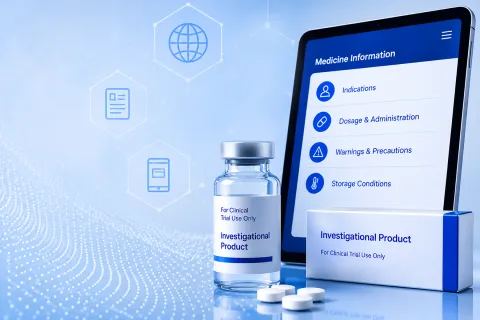
Interactive labels are an evolution from static files to digitally enabled, user-centric tools that can be customized by the end-user. These labels can include hyperlinks, embedded videos, dosage calculators, and real-time updates directly from Regulatory databases.
Such functionality not only supports Structured Product Labeling compliance but also elevates the user experience by:
- Allowing healthcare providers to navigate directly to relevant sections (e.g., dosage, contraindications)
- Offering multilingual capabilities in real time
- Providing accessibility features such as screen reader compatibility
- Dynamic safety and usage updates
Interactive labeling transforms the Regulatory labeling paradigm from document-based management to data-driven product information delivery.
Here’s a quick visual overview of the evolution from static to digital labels:
Labeling Type | Characteristics | Limitations | Digital Alternative |
|---|---|---|---|
Static PDFs | Non-editable, print-friendly | Slow updates, not user-friendly | Interactive Digital Labels |
Manual Processes | Spreadsheet tracking, siloed content | Error-prone, inefficient | Automated Label Lifecycle Systems |
Flat Documents | Text-only, no interactivity | Poor accessibility, outdated formats | SPL/XML-Based Structured Labels |
Regulatory Push Toward Structured and Digital Formats
Regulators across the globe are encouraging or mandating the use of Structured Product Labeling formats. For instance:
- The US FDA has adopted SPL for drug listing and labeling
- The EU’s IDMP (Identification of Medicinal Products) initiative promotes structured data use
- Health Canada and other global agencies are exploring XML-based formats for label submissions
This momentum underscores the urgency for pharmaceutical companies to adopt digital label solutions that support structured content authoring, validation, and submission.
Benefits of Digital Labeling for Pharma Companies
Adopting a digital labeling framework brings several tangible benefits to pharmaceutical companies, including:
1. Enhanced Compliance
With Structured Product Labeling, companies can automate compliance checks and align easily with evolving Regulatory requirements.
2. Global Labeling Harmonization
Through centralized content management, labels can be efficiently adapted to local markets while maintaining alignment with the Company Core Data Sheet (CCDS).
3. Operational Efficiency
By reducing manual workflows, companies save time and resources during Regulatory submissions and updates.
4. Improved Patient Safety and Engagement
Dynamic and interactive labels ensure that accurate, timely, and accessible information reaches patients and healthcare providers.
5. Future-Readiness
Companies embracing digital label solutions are better positioned to integrate with future technologies, including AI-driven validation, automated translations, and cross-platform content synchronization.
Freyr Solutions: Powering the Digital Labeling Revolution
As a global leader in Regulatory labeling services, Freyr Solutions helps life sciences organizations transition from static labeling models to agile, digital-first systems. Our services cover the entire digital labeling lifecycle—from content authoring and template design to global submission and maintenance, ensuring full compliance with Structured Product Labeling mandates.
Freyr’s digital labeling offerings include:
- End-to-end SPL submission support
- Global CCDS-LPD alignment strategy
- Label content lifecycle management
- Label automation and validation tools
- Regulatory Intelligence Integration
With in-depth domain expertise and cutting-edge digital platforms, Freyr Solutions ensures faster time-to-market, enhanced quality, and risk mitigation across the labeling continuum.
The Way Forward
Pharmaceutical labeling is no longer just a Regulatory checkbox—it’s a strategic asset. As the industry moves toward more intelligent, patient-centric, and compliant systems, the adoption of digital labeling solutions and Structured Product Labeling formats is a necessity.
Companies that invest in digital transformation today will streamline their global operations and future-proof their labeling strategies for tomorrow’s Regulatory demands.
Partner with Freyr Solutions to lead your digital labeling transformation. From Structured Product Labeling to next-gen digital label solutions, we help you drive compliance, agility, and global reach—seamlessly.
Contact us today to learn how we can help digitize your labeling processes.