Consult

1 min read
For companies placing chemical products on the EU market, compliance with the Classification Labelling Packaging (CLP) Regulation is essential. It ensures clear communication of hazards, protecting workers, consumers, and the environment. Here’s what businesses need to know to stay compliant and avoid penalties.
1. CLP hazard classification
The first step is identifying and classifying hazards for chemical substances and mixtures. This assessment must follow CLP criteria and include checks against harmonized classifications listed in Annex VI of CLP, which are legally binding. Accurate classification forms the foundation for correct CLP chemical labeling and packaging.
2. CLP labeling requirements
Every hazardous chemical product must carry a compliant label that includes:
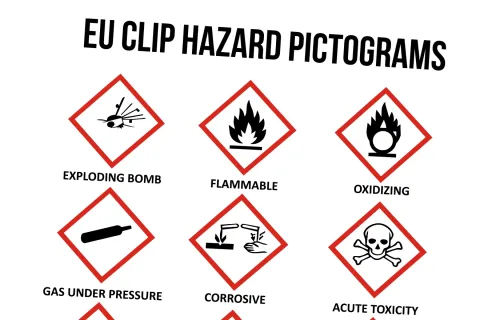
- Hazard pictograms (red diamond-shaped symbols)
- Signal words like “Danger” or “Warning”
- Hazard (H) statements describing the nature and severity of hazards
- Precautionary (P) statements detailing safety measures
- Product identifier (chemical name or mixture composition)
- Supplier’s contact details
Labels must be durable, legible, and in the official language(s) of the EU country where the product is sold. They also need to be updated when new hazard information becomes available.
3. Safety Data Sheets (SDS) and Packaging
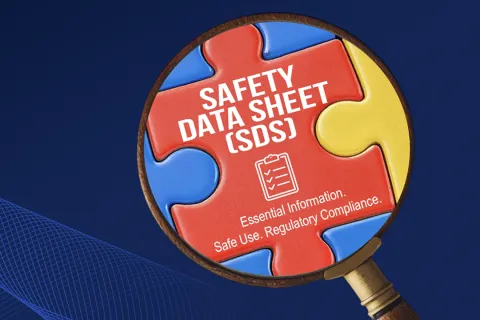
For ensuring SDS compliance EU, the Safety Data Sheets must comply with REACH Annex II , providing detailed information about hazards, safe handling, and disposal. Suppliers must ensure compliance with Safety Data Sheet regulations EU by updating sheets as product classifications or safety measures change.
Packaging plays a crucial role in ensuring chemical safety. It must prevent leaks and maintain chemical stability. For certain hazardous products, child-resistant closures and tactile warnings are mandatory. CLP Regulation Labels must remain firmly attached and resistant to damage.
4. ECHA CLP Notification and Reporting
Manufacturers and importers must notify hazardous substances to ECHA’s classification and labeling inventory. For hazardous mixtures, a Poison Centre Notification (PCN) is required to support emergency health response across the EU.
5. Continuous Monitoring
CLP compliance isn’t a one-time task. Companies must stay informed about regulatory updates, including changes through Adaptations to Technical Progress (ATPs). Regular reviews of hazard classifications, labels, and SDSs help maintain compliance.
Understanding CLP Classification requirements can be complex. Freyr’s regulatory experts can help ensure your chemical products meet all classification, labeling, packaging, and reporting obligations. Contact us today for trusted compliance support.