Consult

2 min read
A practical OSHA Hazard Communication Standard checklist to ensure OSHA chemical safety in the workplace and Regulatory compliance
Why OSHA Compliance Matters
The OSHA Hazard Communication Standard (HCS) ensures that employees are informed about chemical hazards through classification, labeling, OSHA SDS requirements, and OSHA hazard communication training.
If your hazard information is incomplete or incorrect, it directly impacts worker safety, audit readiness, and timely compliance with evolving regulatory deadlines, increasing legal and operational risks.
(Click Here to know about the OSHA compliance Deadlines)
1. Chemical Inventory & Identification
✔ Maintain a complete list of all chemicals in the workplace
✔ Include:
- Substances and mixtures
- Raw materials and intermediates
✔ Record:
- Chemical names
- CAS numbers
- Locations and quantities
✔ Regularly update inventory
2. OSHA Hazard Classification
✔ Classify all chemicals based on:
- Health hazards (e.g., toxicity, carcinogenicity)
- Physical hazards (e.g., flammability, explosiveness)
✔ Follow OSHA’s classification process:
- Data collection
- Data analysis
- Hazard determination
✔ Use:
- Scientific literature
- Existing test data
- Weight of Evidence (WoE) approach where required
✔ Ensure classification is accurate and documented
3. SDS OSHA requirements
✔ Ensure SDS is available for every hazardous chemical
✔ Follow the 16-section SDS format
✔ Key checks:
- Accurate hazard classification
- Up-to-date information
- Consistency with GHS label requirements
✔ Ensure SDS is:
- Easily accessible to employees
- Available during all work shifts
4. OSHA Chemical Labeling Requirements
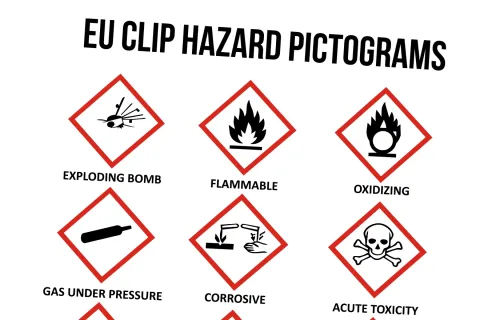
✔ All containers must include:

✔ Ensure:
- Labels are clear and legible
- Labels match SDS information
✔ Update labels when classifications change
5. Employee Training & Awareness
✔ Train employees on:
- Chemical hazards in their workplace
- How to read SDS and labels
- Protective measures and PPE
- Emergency procedures
✔ Conduct training:
- At the time of initial assignment
- When new hazards are introduced
✔ Maintain training records
6. Hazard Communication Program OSHA (Written Plan)
✔ Maintain a written Hazard Communication Program
✔ Include:
- Chemical inventory
- Labeling system
- SDS management process
- Training procedures
✔ Ensure program is:
- Documented
- Accessible
- Regularly reviewed
7. Data Collection & Documentation
✔ Collect and maintain:
- Hazard data
- Scientific references
- Classification rationale
✔ Document:
- Decision-making process
- Data sources used
✔ Keep records for audits and inspections
8. Workplace Controls & Safety Measures
✔ Implement control measures:
- Engineering controls (ventilation, containment)
- Administrative controls
- Personal Protective Equipment (PPE)
✔ Ensure:
- Proper storage and segregation
- Spill response procedures
- Emergency equipment availability
9. Compliance with Updates & Reviews
✔ Regularly review:
- SDS and labels
- Hazard classifications
- Regulatory updates
✔ Update when:
- New hazard data becomes available
- Chemical composition changes
10. Audit Readiness
✔ Be prepared to demonstrate:
- Complete chemical inventory
- Accurate hazard classification
- Updated SDS and labels
- Employee training records
✔ Conduct internal audits periodically
Key Insight from OSHA Guidance
Hazard classification must be based on available scientific evidence and proper evaluation. Employers must ensure that hazard information is complete and accurate for effective communication. (Click Here to Know about Outdated SDS Risks)
OSHA compliance is not just about documentation; it’s about ensuring workers understand and are protected from chemical hazards.
A strong hazard communication program reduces Workplace incidents, Regulatory risks and Operational disruptions.
Strengthen your OSHA compliance framework with accurate OSHA hazard classification, clear communication, and proactive safety practices before gaps turn into violations. Close compliance gaps before audits do, by connecting with Freyr for end-to-end hazard communication and safety compliance solutions.