Consult


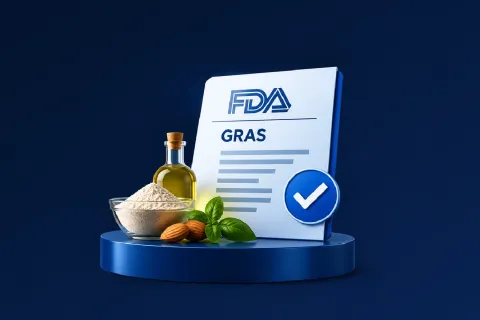
Successfully introducing a food ingredient into the U.S. market requires demonstrating its safety under the intended conditions of use. Whether you are developing a novel ingredient, reformulating an existing product, or expanding into new food categories, a Generally Recognized as Safe (GRAS) determination may be a critical step toward commercialization.
While establishing GRAS status has always been a legal requirement, under the proposed framework, submission of a GRAS Notice to the FDA would become mandatory, replacing the current voluntary notification system. Accordingly, companies would no longer have the option to rely solely on a Self-Affirmed GRAS conclusion and would be required to obtain FDA review through the GRAS Notification process.
Freyr helps food manufacturers, ingredient suppliers, and innovators navigate GRAS assessments, safety evaluations, dossier preparation, and FDA GRAS notification support to facilitate compliant market entry.
What Is GRAS?
Generally Recognized as Safe (GRAS) is a regulatory classification that allows food ingredients to be used in conventional foods when qualified experts conclude that the ingredient is safe under its intended conditions of use based on publicly available scientific evidence.
Unlike food additives, GRAS ingredients are exempt from food additive approval requirements; however, under the proposed framework, submission of a GRAS Notice to the FDA would be required. Companies must establish and maintain a robust scientific basis supporting their GRAS conclusion.
GRAS determinations are commonly used for:

Novel food ingredients

Functional ingredients

Botanical extracts

Alternative proteins

Fermentation-derived ingredients

Specialty food ingredients
Does Your Ingredient Require a GRAS Determination?
A GRAS determination may be appropriate when:

The ingredient will be used in conventional foods or beverages
No food additive approval exists for the intended use

Safety can be demonstrated through publicly available scientific evidence

Expert consensus can be established regarding ingredient safety
Organizations often consider GRAS determination when introducing innovative ingredients while supporting commercialization objectives and regulatory compliance.
GRAS Determination Requirements
A scientifically robust GRAS conclusion generally includes:
| Ingredient Identity |
|
| Intended Conditions of Use |
|
| Safety Evidence |
|
| Scientific Consensus |
|
GRAS Determination Process
01
Step 1: Regulatory Assessment
Evaluate ingredient status and determine whether GRAS is an appropriate pathway.
02
Step 2: Data Gap Analysis
Assess available evidence and identify deficiencies.
03
Step 3: Safety Evaluation
Conduct toxicological, nutritional, and scientific reviews.
04
Step 4: Exposure Assessment
Estimate dietary intake under intended conditions of use.
05
Step 5: GRAS Dossier Development
Compile scientific evidence supporting the GRAS conclusion.
06
Step 6: Expert Review
Facilitate independent expert panel evaluations, where applicable.
07
Step 7: FDA GRAS Notification
Prepare and submit a GRAS Notice to the FDA.
Common GRAS Challenges
| Challenge | How We Help |
|---|---|
| Insufficient Safety Evidence | We conduct comprehensive scientific reviews and safety assessments. |
| Limited Toxicological Data | We identify evidence gaps and develop data strategies. |
| Incomplete Exposure Assessments | We perform dietary exposure evaluations to support intended uses. |
| Weak Scientific Consensus | We strengthen substantiation using publicly available scientific evidence. |
| Ingredient Characterization Gaps | We support detailed ingredient identity and specification development. |
| FDA Questions or Requests for Clarification Regarding Safety Conclusions | We provide scientific and regulatory response support. |
GRAS vs NDIN: Which Regulatory Pathway Is Right for Your Ingredient?
Although both pathways involve safety assessments, they apply to different product categories and regulatory objectives.
| Criteria | GRAS | NDIN |
|---|---|---|
| Primary Use | Conventional Foods & Beverages | Dietary Supplements |
| Applicable Ingredient | Food Ingredient | New Dietary Ingredient |
| FDA Notification | Required (under the proposed framework) | Generally Required |
| Safety Standard | General Recognition of Safety | Reasonable Expectation of Safety |
| Expert Consensus | Required | Not Required |
| Product Category | Foods | Dietary Supplements |
| Best Suited For | Ingredients intended for use in foods and beverages | Supplement ingredients introduced after Oct 15, 1994 |
Not sure which pathway applies? We help determine the most appropriate regulatory strategy based on ingredient characteristics and intended use.
How Can Freyr Help?

GRAS applicability assessments

Regulatory pathway evaluations

Scientific literature reviews

Toxicological and safety assessments

Exposure and dietary intake evaluations
GRAS dossier preparation

Expert panel support

FDA GRAS notification support

Regulatory query management
Why Choose Freyr?

Regulatory strategies tailored to your ingredient, intended use, and commercialization objectives

Scientific substantiation to support robust GRAS conclusions

Toxicological and safety assessments conducted by multidisciplinary experts

Comprehensive dietary exposure and intake evaluations

Robust GRAS dossier preparation aligned with FDA expectations

Support for independent expert panel reviews and consensus development

FDA GRAS notification preparation and submission assistance

Proactive identification and mitigation of scientific and regulatory risks

Experience supporting novel ingredients, functional ingredients, botanicals, and alternative proteins
Integrated support across ingredient compliance, labeling, and market access requirements
Ongoing regulatory support throughout the product development lifecycle
A collaborative approach focused on accelerating commercialization while managing compliance risks
Accelerate Your GRAS Strategy
Whether you’re evaluating a novel ingredient, preparing a GRAS dossier, or preparing for FDA GRAS notification, our team provides the expertise you need for successful market entry and commercialization.
Frequently Asked Questions (FAQs)
From determining whether an ingredient qualifies for a GRAS conclusion to understanding FDA GRAS notification requirements and expert panel expectations, these FAQs address key aspects of the GRAS determination process and regulatory compliance strategy.
01. What does GRAS mean?
GRAS (Generally Recognized as Safe) is a U.S. regulatory designation for substances that are generally recognized by qualified experts as safe under their intended conditions of use based on publicly available scientific evidence.
02. Is FDA approval required for GRAS ingredients?
Under the proposed framework, FDA review through the GRAS Notification process would be required for GRAS ingredients. While companies are responsible for establishing that an ingredient is Generally Recognized as Safe (GRAS), they would no longer be able to rely solely on a self-affirmed GRAS conclusion and would be required to submit a GRAS Notice to the FDA for review.
03. What is the difference between GRAS and a food additive?
Food additives generally require FDA premarket approval, whereas GRAS substances are exempt from food additive approval requirements and, under the proposed framework, would be subject to FDA GRAS notification requirements.
04. What evidence is required for a GRAS determination?
Supporting evidence typically includes scientific literature, toxicological studies, human data, exposure assessments, and manufacturing information demonstrating safety under the intended conditions of use.
05. Can botanical ingredients receive GRAS status?
Yes. Botanical ingredients may be eligible for a GRAS conclusion if sufficient scientific evidence supports their safety for the intended food application.
06. Is an FDA GRAS Notification mandatory?
Yes. Under the proposed framework, submission of a GRAS Notice to the FDA would be mandatory. Companies would no longer be able to rely solely on a self-affirmed GRAS conclusion and would be required to notify the FDA and undergo FDA review through the GRAS Notification process.
07. How long does a GRAS determination take?
Timelines vary depending on ingredient complexity, available scientific evidence, and the complexity of FDA review during the GRAS notification process.
08. What is a GRAS expert panel?
A GRAS expert panel consists of qualified experts who independently evaluate the available scientific evidence and assess whether an ingredient is safe for its intended use.
09. Can a GRAS ingredient be used in any food product?
No. A GRAS conclusion applies only to the specific conditions of use, food categories, and use levels evaluated during the safety assessment.
10. Does GRAS status apply globally?
No. GRAS is a U.S. regulatory framework. Other countries may have separate approval pathways and compliance requirements.
11. What happens if the FDA raises questions about a GRAS Notice?
FDA may request additional information or clarification regarding the submitted safety evidence before completing its review.
12. How can I determine whether my ingredient is suitable for a GRAS determination?
A regulatory assessment can help evaluate the ingredient's intended use, safety evidence, and applicable regulatory requirements to determine whether GRAS is appropriate.