Consult

Why It Matters
The compliance gap widens fast — if you let it
Regulatory requirements for raw materials, ingredients, and finished products vary across national, state, and provincial jurisdictions, and they change constantly. When supplier data is incomplete, undocumented, or out of date, the gap between required and actual compliance widens quickly — creating risk of market delays, non-compliant claims, reformulation costs, and reputational damage.
With deep regulatory expertise and a global presence, Freyr supports the entire supply chain compliance value chain — from supplier communication and document management to product formula development and review — helping you catch gaps at the earliest stages of product development and deliver compliant products to market faster.
![Supply Chain Compliance Services]() Document-first compliance
Document-first compliance
 Document-first compliance
Every claim traced back to a source document — RMQ, SDS, spec sheet, or COA — kept current through a structured management system.
![Supply Chain Compliance Services]() Proactive, not reactive
Proactive, not reactive
 Proactive, not reactive
Regulatory monitoring built into the process, so shifting rules are caught before they become launch-blocking gaps.
Not sure how wide your compliance gap is?
Request a complimentary Supply Chain Compliance Assessment and get a clear picture of your risk areas within days.
Our Services
Four pillars of supply chain compliance
Modular services that plug in wherever your program needs the most support — from raw material intake to sustainability disclosure.

Supplier & Raw Material Documentation
- Retrieval and review of source documents (RMQs, SDS, specifications, COAs)
- End-to-end supplier document management
- Document Management System (DMS) setup for periodic updates
- Gap analysis of raw material documentation

Regulatory Formulation & Ingredient Compliance
- Regulatory formulation assessment for cosmetics & consumer products
- Ingredient compliance vs. allowed / restricted / prohibited lists
- INCI list generation & labeling support
- Monitoring of colorant & preservative regulations

Supply Chain Due Diligence & Traceability
- Supplier risk screening & multi-tier mapping
- Responsible sourcing & conflict minerals due diligence
- EUDR traceability, risk assessment & DDS readiness
- Supplier onboarding & ongoing monitoring

ESG & Sustainability Compliance
- CSRD & CSDDD (CS3D) program alignment
- Human rights & environmental due diligence documentation
- Responsible-sourcing & sustainability reporting support
- Stakeholder-ready disclosure preparation
Our Approach
How we take you from gap to audit-ready
1
Assess
Map products, suppliers, and markets to identify applicable regulations and gaps.
2
Collect & Verify
Gather and validate supplier documentation, formulations, and sourcing data.
3
Remediate
Close gaps through reformulation guidance, supplier engagement, and updated documentation.
4
Monitor
Track regulatory change and supplier data continuously through a structured DMS.
5
Report
Prepare audit-ready documentation and disclosures for regulators and stakeholders.
See this process applied to your portfolio
Walk through how the Assess → Collect → Remediate → Monitor → Report workflow would run against your specific products, suppliers, and markets.
Industries We Serve
Compliance built around your category

Chemicals
Ingredient inventory compliance, hazard classification, and supply chain documentation for manufacturers and formulators.
Cosmetics & Personal Care
INCI list generation, formulation compliance, and labeling support across global cosmetics regulations.

Food & Beverage
Raw material and ingredient compliance, supplier documentation, and traceability across food safety and labeling rules.

Consumer Products
Ingredient and material compliance across household, personal care, and general consumer product categories.
Client Success Story
Raw Material Compliance Assessment for a leading British consumer products manufacturer
General Consumer Product
Raw Material Compliance Assessment for a Leading British Consumer Products Manufacturer
Challenge
The client, a leading British consumer products company spanning health, hygiene, and nutrition, needed raw material and formulation compliance across the EU, UK, and global markets. Suppliers could not confirm nanomaterial status, heavy metal levels in children’s products were elevated, Indonesia introduced new Halal certification requirements, and the client lacked visibility into how supplier and market changes affected labelling and formulation.
Solution
Freyr’s Chemical Safety Regulatory Affairs team built scientifically justified waiver arguments, standardized supplier declaration templates, a heavy metal risk assessment strategy, and Halal transition planning, while partnering with fragrance houses to validate safe allergen limits.
Outcome
The client gained a reusable toxicology monitoring process, avoided costly reformulations, and sustained compliant market access across current and new product categories.
Ready to close your compliance gaps?
Download the Supply Chain Compliance Readiness Checklist and benchmark your program against the frameworks reshaping your industry.
Why Freyr
A single partner across the compliance value chain

Global regulatory network
Expertise spanning multiple industries and jurisdictions, built to track local nuance at global scale.

End-to-end coverage
One team supporting the full value chain, from raw material sourcing to finished product launch.

Proven delivery track record
Supporting supply chain compliance and product launches for consumer goods, cosmetics, chemicals & food brands.

Proactive monitoring
Structured document management keeps you ahead of regulatory change instead of reacting to it.
Note: this band is a design placeholder. Swap in verified client counts, certifications, and named case studies from Freyr’s marketing team before publishing.
Not sure where your compliance gaps are?
Download the Supply Chain Compliance Readiness Checklist, or book a complimentary assessment with our regulatory experts.
FAQs
Frequently asked questions
Common questions about supply chain compliance across chemicals, cosmetics, food, and consumer products.
What is supply chain compliance for chemicals, cosmetics, food, and consumer products?
It is the ongoing practice of ensuring raw materials, ingredients, formulations, and finished products meet the regulatory requirements of every market where they are sold, including documentation, labeling, sourcing, and sustainability disclosure obligations.
Why do supply chain compliance requirements vary by country?
Chemical, cosmetic, food, and consumer product regulations are set at the national, state, and provincial level, and each jurisdiction defines its own allowed, restricted, and prohibited substances, labeling rules, and documentation standards — and these rules change frequently.
What documentation is typically required from suppliers?
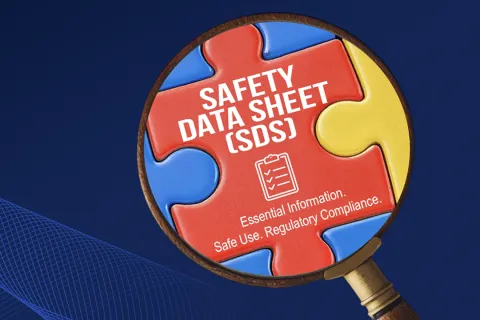
Common documents include raw material questionnaires (RMQs), safety data sheets (SDS), product specifications, and certificates of analysis (COAs), all of which need to be current, complete, and traceable.
What is the EU Deforestation Regulation (EUDR) and who does it affect?
EUDR requires companies placing certain commodities — such as soy, palm oil, coffee, cocoa, timber, rubber, and cattle products — on the EU market to demonstrate deforestation-free sourcing through due diligence statements and traceability data.
What is the difference between CSRD and CSDDD (CS3D)?
CSRD governs sustainability reporting and disclosure obligations for in-scope companies, while CSDDD (CS3D) requires companies to conduct human rights and environmental due diligence across their value chain. The two frameworks are related but address different obligations.
How long does a supply chain compliance gap assessment take?
An initial risk snapshot can typically be delivered within days of the complimentary assessment request. A full gap assessment scoped to your complete product and supplier set usually completes within a few weeks, depending on portfolio size, number of markets, and supplier data completeness.
Can Freyr support ingredient and INCI compliance for cosmetics specifically?
Yes. Freyr's regulatory formulation and ingredient compliance services include INCI list generation, labeling support, and ongoing monitoring of colorant and preservative regulations across markets.
How often should supplier and raw material documentation be reviewed?
Supplier documentation should be reviewed on a periodic basis and whenever a trigger event occurs — such as a formulation change, a new regulation, or an expiring certificate — which is why a structured Document Management System (DMS) is recommended.