Consult

Introducing a new dietary ingredient (NDI) into the U.S. market requires more than scientific innovation; it requires a clear Regulatory strategy.
Under the Dietary Supplement Health and Education Act (DSHEA), dietary ingredients that were not marketed in the United States before October 15, 1994, may require a New Dietary Ingredient Notification (NDIN) submission to the U.S. Food and Drug Administration (FDA) before they can be legally marketed in dietary supplements.
Determining whether an ingredient qualifies as an NDI, evaluating available safety evidence, and preparing a scientifically robust notification can be complex. Regulatory uncertainties, insufficient safety data, and incomplete submissions can lead to FDA objections, launch delays, or increased compliance risks.
Freyr supports dietary supplement manufacturers, ingredient suppliers, innovators, and brand owners with end-to-end NDIN regulatory services, helping support efficient market entry planning while maintaining regulatory compliance.
What Is a New Dietary Ingredient Notification (NDIN)?
A New Dietary Ingredient Notification (NDIN) is a premarket notification submitted to the FDA for dietary ingredients that were not marketed in the United States before October 15, 1994.
The notification provides evidence demonstrating that the ingredient is reasonably expected to be safe under the recommended conditions of use.
Manufacturers or distributors intending to market dietary supplements containing an NDI must generally submit an NDIN at least 75 days before introducing the product into interstate commerce, unless the dietary ingredient has been present in the food supply as an article used for food in a form in which the food has not been chemically altered.
An NDIN submission does not constitute FDA approval. Instead, it provides the FDA with an opportunity to review the safety information supporting the ingredient’s intended use.
Does Your Ingredient Require an NDIN?
One of the most common challenges faced by dietary supplement companies is determining whether an ingredient qualifies as an NDI and whether an NDIN submission is required.
An NDIN may be required when:

The ingredient was not marketed in the U.S. before October 15, 1994

A new botanical extract is introduced

A novel fermentation-derived ingredient is developed

A new manufacturing process significantly alters an existing ingredient

New conditions of use affect safety considerations
An NDIN generally is not required when:

Evidence demonstrates the dietary ingredient was marketed in the United States before October 15, 1994

The dietary ingredient has been present in the food supply as an article used for food in a form in which the food has not been chemically altered

Another applicable exemption under section 413(a) of the FD&C Act applies
Freyr helps companies evaluate ingredient status and determine the most appropriate regulatory strategy before investing in dossier development.
FDA NDIN Submission Requirements
A successful NDIN submission requires comprehensive scientific evidence demonstrating safety under the proposed conditions of use.
FDA generally expects information addressing:
| Identity of the Ingredient |
|
| Conditions of Use |
|
| History of Use |
|
| Safety Evidence |
|
| Exposure Assessment |
|
NDIN Submission Process
01
Step 1: Ingredient Assessment
Determine whether the ingredient qualifies as an NDI and evaluate applicable Regulatory pathways.
02
Step 2: Data Gap Analysis
Review available scientific evidence and identify additional information needed to support safety.
03
Step 3: Safety Evaluation
Conduct comprehensive toxicological and scientific assessments.
04
Step 4: Dossier Preparation
Compile supporting documentation and prepare the NDIN package.
05
Step 5: FDA Submission
Submit the notification at least 75 days before marketing.
06
Step 6: FDA Review
FDA reviews the submitted evidence and may respond with no objection, objections, or other comments regarding the information provided.
07
Step 7: Commercialization Support
Support ongoing compliance activities following FDA review and product commercialization, where applicable.
Common Reasons NDIN Notifications Face FDA Objections
Many NDIN submissions encounter challenges due to deficiencies in safety documentation or scientific justification.
| Common NDIN Pitfall | How We Help |
|---|---|
| Insufficient Safety Evidence | We conduct comprehensive literature reviews and safety assessments to build a scientifically robust safety narrative. |
| Limited Toxicological Data | We identify data gaps early and recommend appropriate toxicological strategies to strengthen the submission package. |
| Poor Ingredient Characterization | We help compile detailed specifications, manufacturing information, and ingredient identity documentation expected by the FDA. |
| Incomplete Manufacturing Information | We support the collection and organization of manufacturing process and quality-control documentation required for review. |
| Weak History-of-Use Documentation | We evaluate available historical use evidence and develop scientifically supported justifications where applicable. |
| Unsupported Intake Levels | We assess proposed use levels and develop evidence-based safety rationales aligned with intended consumption patterns. |
| Inadequate Exposure Assessment | We perform exposure evaluations to demonstrate a reasonable expectation of safety under the proposed conditions of use. |
| Scientific Data Gaps | We identify potential deficiencies early and develop strategies to strengthen the overall submission. |
| FDA Information Requests | We support response preparation and scientific justification to help address FDA concerns efficiently. |
A proactive regulatory strategy can significantly improve submission quality and help reduce the likelihood of FDA information requests or objections.
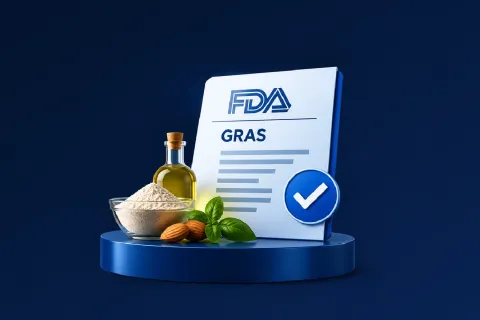
NDIN vs GRAS: Which Regulatory Pathway Is Right for Your Ingredient?
While NDIN and GRAS pathways both involve safety assessments, they serve different regulatory purposes.
| Criteria | NDIN | GRAS |
|---|---|---|
| Product Category | Dietary Supplements | Conventional Foods |
| Authority | FDA | FDA |
| Premarket Notification | Generally Required | Voluntary (through FDA's GRAS Notification Program) |
| Intended Use | Dietary Ingredients | Food Ingredients |
| Safety Standard | Reasonable Expectation of Safety | General Recognition of Safety |
| Scientific Evidence | Required to support the applicable safety standard | Required |
| Commercial Application | Dietary supplements containing new dietary ingredients | Foods and Beverages |
| Best Suited For | Supplement ingredients introduced after October 15, 1994 | Ingredients intended for use in foods and beverages |
Selecting the appropriate pathway depends on product classification, intended use, ingredient characteristics, and commercialization strategy.
How Can Freyr Help?

NDI applicability assessments

Regulatory pathway evaluation

Safety and toxicological assessments

Scientific literature reviews

Exposure and intake assessments

NDIN dossier preparation

FDA submission support

FDA response management

Post-submission Regulatory guidance
Why Choose Freyr?
Freyr combines regulatory, scientific, toxicological, and compliance expertise to support preparation of scientifically robust NDIN submissions.
Our multidisciplinary team supports:

Ingredient manufacturers

Dietary supplement brands

Contract manufacturers

R&D organizations

Global market entrants
Accelerate Your NDIN Submission Strategy
Evaluate novel dietary ingredients, prepare first time notifications, or respond to FDA questions with confidence. Support NDIN submissions through scientifically supported safety evaluations, dossier preparation, and regulatory submission assistance.
Frequently Asked Questions (FAQs)
From determining whether an ingredient qualifies as a New Dietary Ingredient (NDI) to understanding FDA notification requirements and safety documentation expectations, these FAQs address key aspects of the NDIN submission process and Regulatory compliance strategy.
01. What is a New Dietary Ingredient (NDI)?
An NDI is a dietary ingredient that was not marketed in the United States before October 15, 1994.
02. How long before commercialization must an NDIN be submitted?
An NDIN must generally be submitted to the FDA at least 75 days before marketing.
03. Does FDA approve NDIN submissions?
No. FDA reviews submitted information but does not formally approve NDINs.
04. What evidence is needed for an NDIN?
Safety evidence may include toxicological studies, human data, history of use information, exposure assessments, and published scientific literature.
05. Can botanical ingredients require an NDIN?
Yes. Botanical ingredients may require an NDIN if they qualify as new dietary ingredients.
06. What happens if the FDA objects to an NDIN?
FDA may object to the notification or request clarification regarding the submitted safety information. The notifier should evaluate the FDA's response before marketing the product.
07. Can a manufacturing process affect NDI status?
Yes. Significant process changes may affect whether an ingredient qualifies as a new dietary ingredient or whether an existing NDIN remains applicable.
08. How do I know if my ingredient requires an NDIN?
A regulatory assessment is typically required to determine ingredient status and applicable exemptions.