Consult

3 min read
Introduction
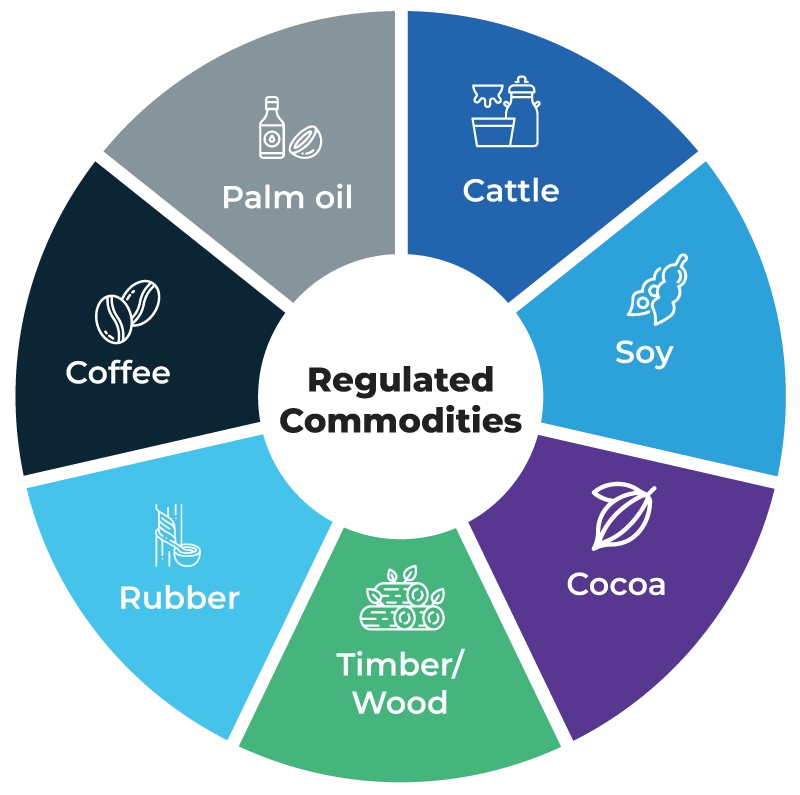
The European Union Deforestation-Free Regulation (EUDR) represents a significant step in the EU's ongoing efforts to combat global deforestation and forest degradation. Formally titled Regulation (EU) 2023/1115, the EUDR aims to prevent the importation and exportation of products linked to deforestation and related environmental harm. Effective from December 30, 2026, this regulation imposes rigorous due diligence and traceability requirements on traders and operators within the EU, covering a wide range of commodities such as palm oil, cattle, soy, coffee, cocoa, timber, rubber, and their derived products.
By understanding the regulation's scope, definitions, and key obligations, manufacturers can better prepare for the upcoming changes and contribute to the global effort to protect forests and biodiversity.
Importance of the EUDR
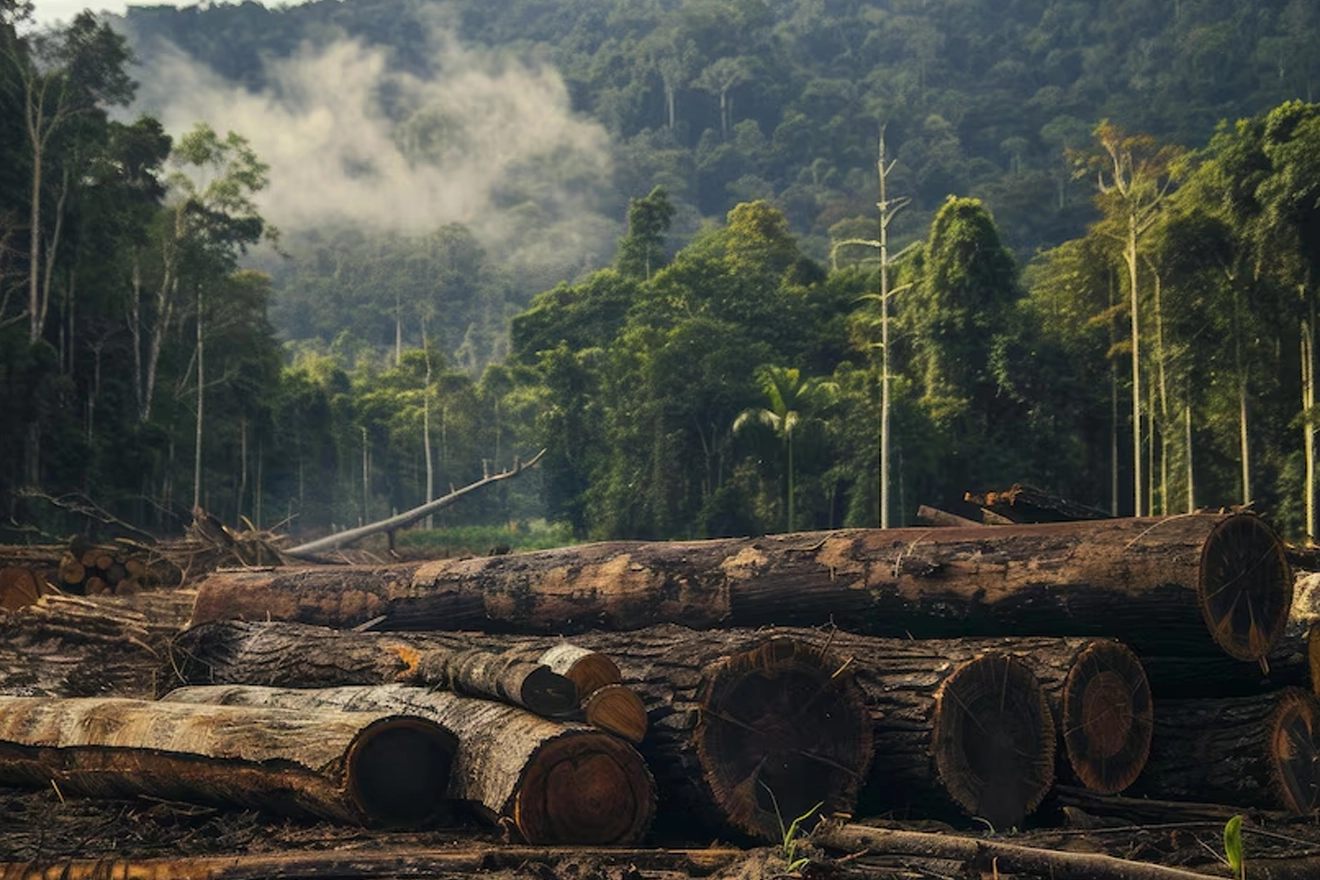
Deforestation and forest degradation are critical global issues with serious environmental and financial impacts. Forest destruction accelerates climate change by releasing greenhouse gases, worsening extreme weather, and disrupting ecosystems. These disruptions pose challenges to agriculture, food production, and supply chain stability, raising costs and risks for businesses.
The EUDR is a crucial part of the EU's broader environmental and sustainability agenda, aligning with other key policies such as the EU Timber Regulation (EUTR), the Renewable Energy Directive, and the Corporate Sustainability Reporting Directive (CSRD). By ensuring that products consumed or exported by EU citizens do not contribute to deforestation, the EUDR supports the goals of the European Green Deal and reinforces the EU's commitment to sustainable development.
Scope and Application of the EUDR
The EUDR applies to all entities involved in placing specified commodities or their derivatives on the EU market, as well as those exporting them from the EU.
Covered derived products include rubber tires, wooden furniture, chocolate, and paper‑based items such as packaging cartons. The regulation applies to all quantities, regardless of size or value, ensuring comprehensive oversight and accountability across the supply chain.
Note: Printed products such as books, newspapers, magazines, and journals have been excluded from the scope under the latest update.
Obligations for Companies
Manufacturers and operators must implement a due diligence system to ensure that their products are deforestation-free and legally produced. This system involves several key steps:
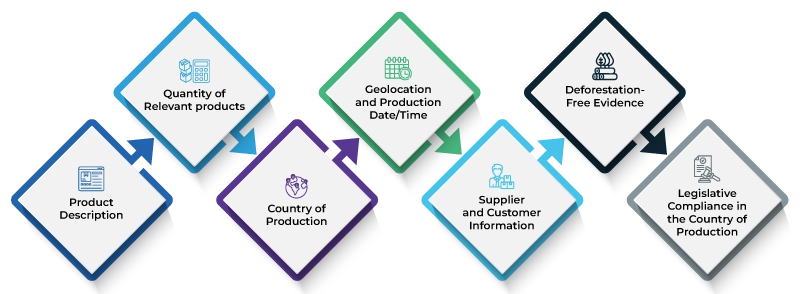
Collecting Documentation: Companies must gather and maintain documentation that proves compliance with the EUDR. The documentation must be retained for at least five (05) years from the date the products are placed on the market or exported and must include the following data:
![Ensuring Compliance with the EU Deforestation]()
- Risk Assessment: Companies must assess the risk of deforestation and non-compliance in their supply chains. Companies must document their risk assessments and classify the risk levels of their products as negligible, low, medium, or high.
- Risk Mitigation: If the risk assessment reveals more than a negligible risk, companies must adopt measures to mitigate the identified risks.
- Verification: Companies must ensure the accuracy of the collected information and compliance with the EUDR requirements.
- Monitoring, Review, and Reporting: Companies must continuously monitor, conduct formal reviews, and report publicly on their due diligence activities, ensuring transparency and accountability at least once a year.
Implementation Timeline
The EUDR was adopted on May 31, 2023 and published on June 9, 2023. It entered into force on June 29, 2023, and will become applicable to operators and traders from December 30, 2026, with an extended deadline of June 30, 2027 for micro and small businesses.
Tools to Monitor, Trace, and Report
Remote Sensing and Location Intelligence
Geospatial data is central to the EUDR due diligence process, enabling verification of product origin and confirmation that no deforestation has occurred after December 31, 2020. Remote sensing tools — including satellite imagery, drone surveys, and plot‑level geolocation data — provide critical visibility into production sites, land use, and forest health. By integrating these technologies with analytical algorithms and machine‑learning models, companies can enhance both the accuracy and efficiency of compliance assessments, ensuring robust monitoring across complex supply chains.
Supply Chain Transparency and Traceability
Manufacturers are required to map their supply chains, identify suppliers and sub-suppliers, and ensure traceability of raw materials to their origin. This involves collecting geolocation coordinates and production data, maintaining separation between compliant and non-compliant commodities, and ensuring that only deforestation-free products are placed on the EU market.
The Deforestation Due Diligence Registry
The EUDR requires operators to submit Due Diligence Statements electronically via the Deforestation Due Diligence Registry, which will be accessible starting November 2024. These statements will be verified by the Registry and Member State authorities, ensuring that all relevant products meet the EUDR's stringent requirements.
Conclusion
The EUDR enforces strict due diligence and traceability requirements to prevent products linked to deforestation from entering or leaving the EU market. Manufacturers must implement strong due diligence systems, manage risks, and ensure supply chain transparency to comply with the regulation. These actions support global efforts to protect forests, combat climate change, and promote sustainable development. With the EUDR deadline approaching, manufacturers should stay updated on requirements, invest in compliance tools, and engage with suppliers to ensure adherence, thereby avoiding penalties and fostering a sustainable future.