Consult

3 min read
Introduction
The volume and complexity of safety data continue to grow as pharmaceutical organizations expand globally, introduce new therapies, and leverage diverse data sources. While identifying potential safety signals remains a fundamental responsibility of pharmacovigilance, today's regulatory environment expects organizations to move beyond simply detecting signals.
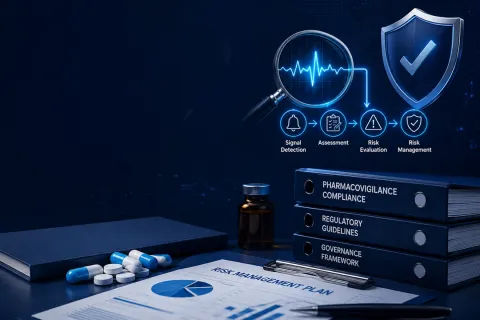
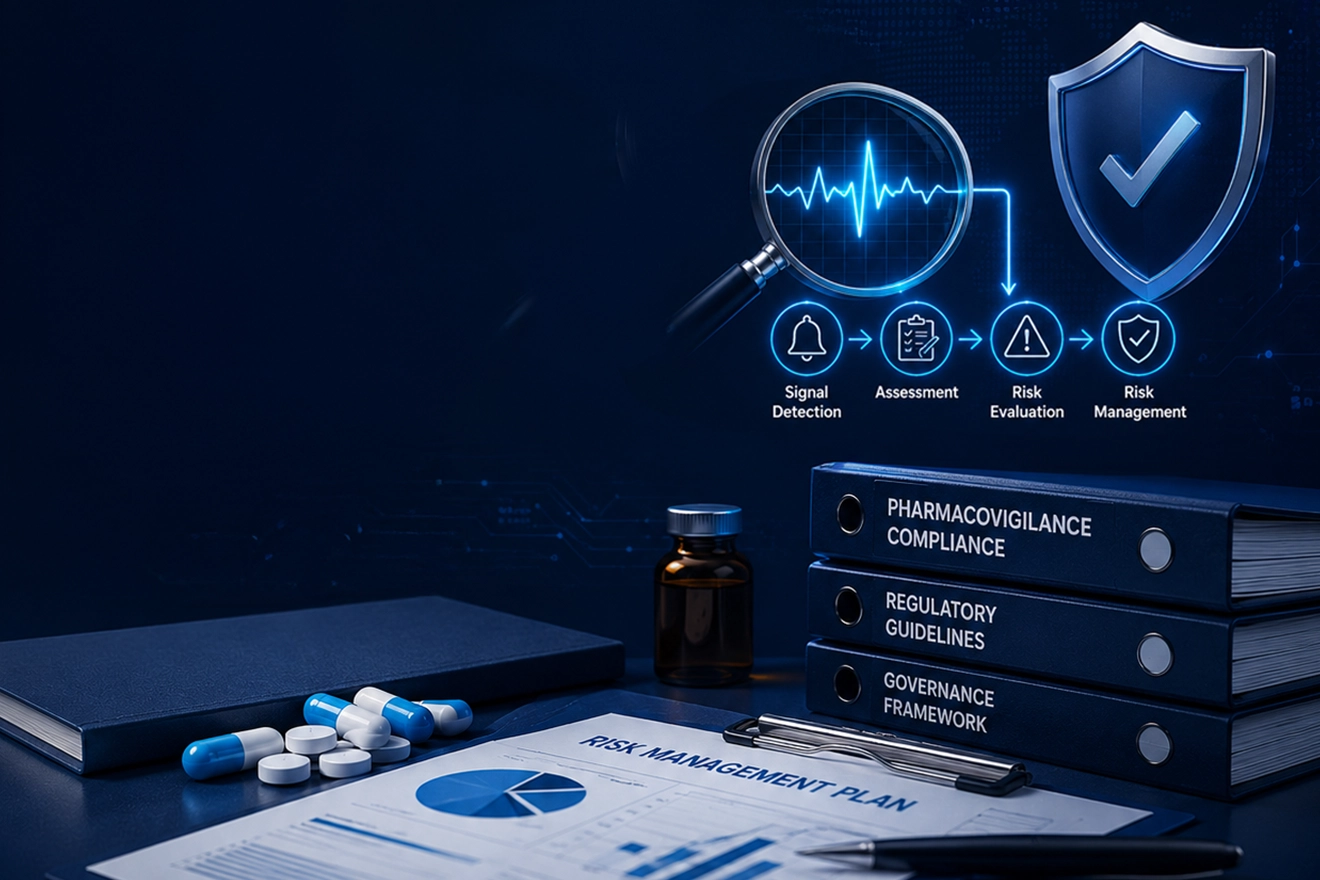
An effective Pharmacovigilance Risk Management strategy ensures that identified safety signals are systematically assessed, translated into meaningful benefit-risk evaluations, and incorporated into broader risk management activities. From updating Risk Management Plans (RMPs) to implementing risk minimization measures and strengthening governance, organizations are increasingly expected to demonstrate that safety signals lead to proactive regulatory action.
As regulatory expectations evolve, integrating signal management into pharmacovigilance governance has become essential for maintaining compliance, protecting patients, and supporting successful regulatory outcomes.
Why Signal Detection Is Only the Beginning
Signal detection plays a critical role in identifying new or changing safety information throughout a medicinal product's lifecycle. However, detecting a signal alone does not improve patient safety or satisfy regulatory expectations.
Health authorities increasingly expect organizations to demonstrate how identified signals are:
- Scientifically evaluated
- Prioritized based on potential clinical impact
- Integrated into benefit-risk assessments
- Used to support regulatory decision-making
- Incorporated into ongoing risk management activities
Without a structured governance framework, valuable safety insights may not translate into meaningful actions that strengthen compliance or improve patient outcomes.
Connecting Signal Detection to Risk Management
An effective Pharmacovigilance Risk Management framework ensures that signal detection is integrated into broader safety governance rather than managed as an isolated activity.
Following signal validation, organizations should determine whether additional pharmacovigilance activities or risk minimization measures are required.
This may include:
- Updating Risk Management Plans (RMPs)
- Revising benefit-risk evaluations
- Implementing additional pharmacovigilance activities
- Updating product safety information
- Developing targeted risk minimization measures
By connecting signal management with structured risk management processes, organizations can respond more effectively to emerging safety concerns while supporting regulatory compliance.
The Role of Risk Management Plans in Safety Governance
A Risk Management Plan (RMP) serves as a central document that outlines how known and potential risks will be monitored, evaluated, and minimized throughout a product's lifecycle.
As new safety information emerges through signal detection activities, organizations should assess whether updates to the RMP are necessary to reflect:
- Newly identified risks
- Changes in existing safety profiles
- Additional pharmacovigilance activities
- Revised risk minimization strategies
- Updated benefit-risk assessments
Maintaining current and scientifically justified Risk Management Plans demonstrates proactive pharmacovigilance governance and supports effective regulatory communication.
Building Stronger Pharmacovigilance Governance
Modern pharmacovigilance governance extends well beyond signal detection.
Organizations require integrated processes that ensure safety information is communicated consistently across internal functions and external partners.
Key governance components include:
REMS Support
When appropriate, evolving safety information may influence Risk Evaluation and Mitigation Strategies (REMS), helping ensure risks are effectively managed while maintaining patient access to therapies.
Pharmacovigilance Agreements
Clear responsibilities between marketing authorization holders and business partners help ensure safety signals are communicated, evaluated, and managed consistently across organizations.
Safety Data Exchange Agreements (SDEAs)
Well-defined Safety Data Exchange Agreements support the timely sharing of safety information between partners, enabling coordinated pharmacovigilance activities and regulatory compliance.
Together, these governance mechanisms ensure that safety signals drive coordinated action rather than isolated decision-making.
Strengthening Inspection Readiness Through Proactive Governance
Regulators increasingly evaluate not only whether organizations detect safety signals, but also how those signals are documented, assessed, and managed throughout the product lifecycle.
Organizations should maintain:
- Documented signal management procedures
- Traceable decision-making processes
- Consistent benefit-risk evaluations
- Clearly defined governance responsibilities
- Comprehensive pharmacovigilance documentation
A proactive governance framework strengthens inspection readiness while demonstrating an organization's commitment to continuous safety oversight.
Best Practices for Integrating Signal Management into Pharmacovigilance Governance
Organizations seeking to strengthen Pharmacovigilance Compliance should consider:
- Integrating signal management into broader governance processes
- Regularly reviewing and updating Risk Management Plans
- Strengthening cross-functional collaboration between safety, regulatory, medical, and quality teams
- Maintaining robust documentation and audit trails
- Establishing clear responsibilities through PV Agreements and SDEAs
- Continuously evaluating benefit-risk throughout the product lifecycle
These practices help transform signal detection into meaningful regulatory action that supports long-term compliance and patient safety.
How Freyr Supports Pharmacovigilance Governance
Freyr helps pharmaceutical and life sciences organizations strengthen pharmacovigilance governance through comprehensive safety and compliance services.
Our capabilities include:
- Risk Management Plans (RMPs)
- REMS Support
- Safety Data Exchange Agreements (SDEAs)
- Pharmacovigilance Agreements
- Global Pharmacovigilance Compliance Support
By combining regulatory expertise with structured governance frameworks, Freyr helps organizations improve risk management, strengthen compliance, and support effective patient safety programs.
Conclusion
Effective signal detection is no longer the final objective of pharmacovigilance—it is the starting point for proactive Pharmacovigilance Risk Management.
Organizations that successfully connect signal management with Risk Management Plans, benefit-risk evaluation, REMS, Safety Data Exchange Agreements, and Pharmacovigilance Agreements are better positioned to strengthen governance, improve inspection readiness, and support long-term patient safety.
As regulatory expectations continue to evolve, integrating signal management into a comprehensive pharmacovigilance governance framework will become increasingly important for achieving sustainable compliance and regulatory success.