Consult


4 min read
Introduction
Modern pharmaceutical operations increasingly depend on collaboration between multiple organizations, including marketing authorization holders, license partners, manufacturers, distributors, contract research organizations, and other service providers. While these partnerships can support efficient product development and commercialization, they also create additional responsibilities for pharmacovigilance teams.
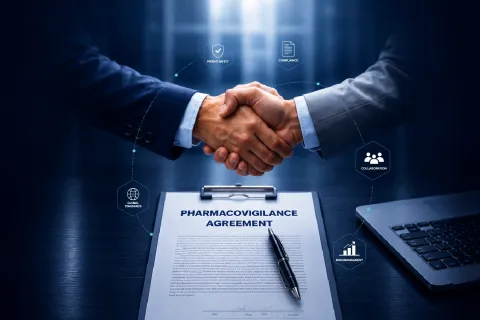
Clear Pharmacovigilance Agreements help establish how safety responsibilities are allocated, how information is exchanged, and how pharmacovigilance obligations are managed between organizations. Without clearly defined processes, gaps in communication, unclear ownership, or delays in safety data exchange can create compliance risks.
As regulatory expectations around safety oversight continue to evolve, strong agreement frameworks are becoming an important component of effective pharmacovigilance governance.
Why Pharmacovigilance Agreements Matter in a Complex Global Environment
A medicinal product's safety information may pass through several organizations during its lifecycle. Each organization may have different responsibilities for collecting, assessing, reporting, monitoring, and communicating safety information.
This complexity makes clear accountability essential.
Pharmacovigilance Agreements can help organizations establish responsibilities related to:
- Safety data exchange
- Adverse event reporting
- Signal management
- Case processing
- Aggregate reporting
- Risk management activities
- Regulatory communication
- Safety information escalation
Clearly defining these responsibilities can help reduce ambiguity and support consistent pharmacovigilance operations across organizational boundaries.
The Governance Risks of Unclear Safety Responsibilities
When pharmacovigilance responsibilities are not clearly defined, organizations may encounter operational and compliance challenges.
Common issues can include:
- Delays in exchanging safety information
- Unclear reporting responsibilities
- Inconsistent communication between partners
- Gaps in safety data documentation
- Conflicting interpretation of responsibilities
- Difficulty demonstrating oversight during inspections
These challenges can become particularly significant when organizations operate across multiple countries and regulatory jurisdictions.
Strong governance therefore requires more than having pharmacovigilance procedures within individual organizations. It requires clearly established responsibilities between all relevant parties.
How Pharmacovigilance Agreements Support Compliance
Effective Pharmacovigilance Compliance depends on organizations being able to demonstrate that safety responsibilities are appropriately defined, implemented, and monitored.
A well-structured agreement can establish:
- Roles and Responsibilities
Each party's pharmacovigilance responsibilities should be clearly documented to minimize uncertainty and duplication. - Reporting Requirements
The agreement can define applicable timelines and processes for exchanging safety information between the parties. - Communication Processes
Clear communication pathways help ensure important safety information reaches the appropriate teams without unnecessary delays. - Regulatory Responsibilities
Organizations can establish which party is responsible for specific regulatory interactions, submissions, or safety obligations. - Oversight and Governance
Defined review and escalation mechanisms help organizations maintain visibility over partner pharmacovigilance activities.
Together, these elements create a more structured framework for managing safety responsibilities.
The Role of Safety Data Exchange Agreements
Safety Data Exchange Agreements (SDEAs) are an important component of pharmacovigilance collaboration.
Organizations may need to exchange safety information with a range of partners, including:
- License partners
- Contract research organizations
- Distributors
- Manufacturers
- Co-development partners
- Marketing partners
A well-defined Safety Data Exchange Agreement establishes how relevant safety information should be communicated between parties.
This can cover areas such as:
- Types of safety information to be exchanged
- Reporting timelines
- Data transmission processes
- Case-related responsibilities
- Reconciliation activities
- Escalation procedures
- Documentation requirements
Effective safety data exchange supports timely pharmacovigilance activities while helping organizations maintain clear accountability.
Connecting Partner Governance With Risk Management
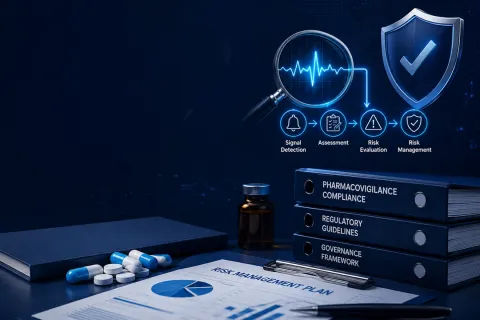
Pharmacovigilance agreements should not operate independently from an organization's broader risk management strategy.
Safety information exchanged through partners can contribute to activities such as:
- Signal detection and evaluation
- Benefit-risk evaluation
- Risk Management Plan updates
- Risk minimization activities
- REMS-related activities, where applicable
For example, new safety information received from a partner may require further evaluation and could ultimately influence an existing Risk Management Plan.
This demonstrates why partner governance is an important part of the broader pharmacovigilance risk management framework.
Strengthening Patient Safety Through Better Collaboration
Ultimately, the purpose of pharmacovigilance governance is to protect patients by ensuring that relevant safety information is identified, evaluated, and acted upon appropriately.
Effective collaboration between organizations can support:
- Timely safety information exchange
- Consistent safety monitoring
- Faster escalation of emerging concerns
- Better coordination of risk management activities
- Improved regulatory preparedness
Strong agreement frameworks therefore contribute not only to compliance but also to Patient Safety throughout the product lifecycle.
Common Areas to Review in Pharmacovigilance Agreements
Organizations can periodically review their agreement frameworks to ensure they remain aligned with current operational and regulatory requirements.
Key areas to consider include:
- Scope of Responsibilities
Are the responsibilities of each party clearly defined? - Safety Data Exchange
Are the types of information, timelines, and communication channels clearly established? - Escalation Procedures
Are there clear processes for handling urgent or significant safety information? - Regulatory Changes
Are agreements reviewed when regulatory requirements or organizational responsibilities change? - Product Lifecycle Changes
Are agreements updated when products undergo variations, transfers, new indications, or other significant lifecycle changes?
Regular review helps ensure that agreements remain effective as business relationships and product portfolios evolve.
Supporting Inspection Readiness
Regulatory inspections may examine how organizations oversee pharmacovigilance responsibilities across internal teams and external partners.
Organizations should therefore be able to demonstrate:
- Clearly documented responsibilities
- Effective safety data exchange processes
- Appropriate oversight of partners
- Evidence of communication and escalation
- Current agreement documentation
- Alignment between agreements and operational procedures
Maintaining robust governance documentation can help organizations demonstrate control over their pharmacovigilance activities and respond more effectively to regulatory scrutiny.
How Freyr Supports Pharmacovigilance Governance
Freyr helps pharmaceutical and life sciences organizations strengthen their pharmacovigilance governance through comprehensive support across partner safety responsibilities.
Our capabilities include:
- Pharmacovigilance Agreements
- Safety Data Exchange Agreements (SDEAs)
- Risk Management Plans (RMPs)
- REMS Support
- Pharmacovigilance compliance and governance support
By combining pharmacovigilance expertise with structured governance processes, Freyr helps organizations establish clearer responsibilities, improve safety data exchange, and strengthen compliance throughout the product lifecycle.
The Future of Pharmacovigilance Partner Governance
As pharmaceutical development and commercialization become increasingly collaborative and global, pharmacovigilance responsibilities will continue to extend across organizational boundaries.
Organizations will need to focus increasingly on:
- Clear accountability
- Faster safety data exchange
- Stronger partner oversight
- Integrated risk management
- Consistent global governance
- Continuous regulatory preparedness
Technology can support information exchange and workflow management, but clearly defined responsibilities and governance processes remain fundamental to effective pharmacovigilance.
Conclusion
Effective pharmacovigilance depends on more than internal safety processes. When multiple organizations contribute to the development, manufacturing, distribution, or commercialization of a medicinal product, clearly defined responsibilities become essential.
Strong Pharmacovigilance Agreements and Safety Data Exchange Agreements help establish accountability, support timely safety information exchange, and strengthen pharmacovigilance compliance.
When integrated with Risk Management Plans, REMS activities, signal management, and broader governance frameworks, effective partner agreements can help organizations maintain stronger oversight throughout the product lifecycle.
As regulatory expectations continue to evolve, organizations that invest in robust pharmacovigilance governance will be better positioned to support compliance, inspection readiness, and patient safety.