Consult

5 min read
MAH Transfer at INVIMA: Five Lenses Your Deal Team May Not Be Looking Through
There is a moment in every pharma acquisition that arrives later than it should. The deal has closed. The lawyers have moved on. Finance is already modeling the integration. And somewhere in that sequence, a member of the regulatory team receives an assignment that everyone else assumed was straightforward: transfer the registrations to the new holder.
What makes that moment instructive is not that it is difficult. It is that by the time it arrives, several decisions have already been made — and made without the right instrument in hand. An MAH transfer at INVIMA does not create the complexity. It reveals it. What was already there, in the registration's history, in its open commitments, in the gap between what the contract says and what INVIMA evaluates — all of it surfaces here. Which is why the question worth asking is not how to manage the transfer. It is what lens was being used when the portfolio was acquired.
There are five. Most deal teams are only looking through some of them.
Lens One: The Financial Model
The financial model did what it was built to do. It captured the revenue projections, the market share, the strategic rationale, the valuation. Nobody builds a financial model to read regulatory history — and that is precisely the gap.
Under Colombia's pharmaceutical regulatory framework, every sanitary registration carries a set of obligations that belong to whoever holds the title: pending post-registration modifications, stability study continuations mid-cycle, GMP certificates approaching renewal. Those obligations do not dissolve when the title changes hands. They transfer — in full, unconditionally — to the incoming marketing authorization holder. The financial model priced what the portfolio was worth. It did not price what it owed.
The deal price reflected the commercial value of the portfolio. What it did not reflect was the regulatory weight attached to every registration — and that weight, under Colombia's pharmaceutical framework, has a legal address.
Lens Two: The Legal Framework
That address is the marketing authorization holder — the entity that, under Colombia's regulatory framework, carries full legal and technical responsibility for everything associated with a registration. When a purchase agreement transfers ownership of a portfolio, it does so in legal language. INVIMA evaluates that transfer in sanitary language. The two frameworks describe the same transaction differently, and the difference matters. What the contract defines as a transfer of ownership, INVIMA assesses as a transfer of sanitary responsibility. The authority is not verifying that the incoming entity exists as a legal entity. It is evaluating whether the new holder can demonstrate continuity of technical accountability — coherence between the incoming holder's structure and the existing dossier on file, traceability of the documentation chain, and the capacity to absorb open commitments that the previous holder carried with the agency. The contract addressed what happens between two parties. INVIMA was not at the negotiating table — and it has its own criteria for what a transfer means. Which raises a question that the legal lens alone cannot answer: what happens to the product in the time between the contract and INVIMA's approval? | The purchase agreement says the registrations are yours. INVIMA operates on a different timeline — and in the interval between those two states, the obligations are already moving. |
Lens Three: The Commercial Calendar
That interval has a cost. Commercially, the product is already yours — it appears in your portfolio, in your forecasts, in your integration plan. Regulatorily, the registration remains under the previous holder's name for all official purposes until INVIMA completes the transfer. And in that gap, the obligations do not pause.
Pharmacovigilance reporting may continue running under the previous holder's name. Post-registration commitments that were in progress do not reset. Any regulatory event that arises during that window — an adverse event, an inspection trigger, a modification requirement — enters a zone of responsibility that few acquisition contracts define with the precision that the situation requires. The commercial calendar marked the closing date. It did not account for the regulatory obligations that were already in motion on that same date — and what happens to them while the transfer is pending.
That question leads directly to something the commercial lens was never designed to see: the registration's own history.
Lens Four: The Regulatory Biography
Every sanitary registration has a history at INVIMA. Not just a current status — a biography. Modifications approved over the years. Inspections on record. Open commitments from previous submissions. Products included in the portfolio that the acquiring company has no intention of commercializing — but which may carry active regulatory obligations that cannot be cancelled overnight.
The regulatory lens does not evaluate a portfolio by its commercial value. It reads that biography — because the biography shapes how the transfer process will unfold, what documentation will be required, and what may surface during the process that nobody anticipated when the deal was being structured. INVIMA processes a significant volume of sanitary registration procedures simultaneously. Transfers do not enter an empty queue, and the coherence of the incoming dossier determines how smoothly the process moves through it.
Most due diligence processes read the numbers. Few read the biography. And the biography was there the whole time — waiting for someone with the right instrument to look at it carefully enough.
Lens Five: The Magnifying Glass
None of the four perspectives above is wrong. Each captures something real and relevant about a pharma acquisition. The problem is not what each lens sees — it is what no single lens sees on its own. And the cost of that blind spot does not appear in the transfer itself. It appears in everything that was already in motion before the transfer was even filed.
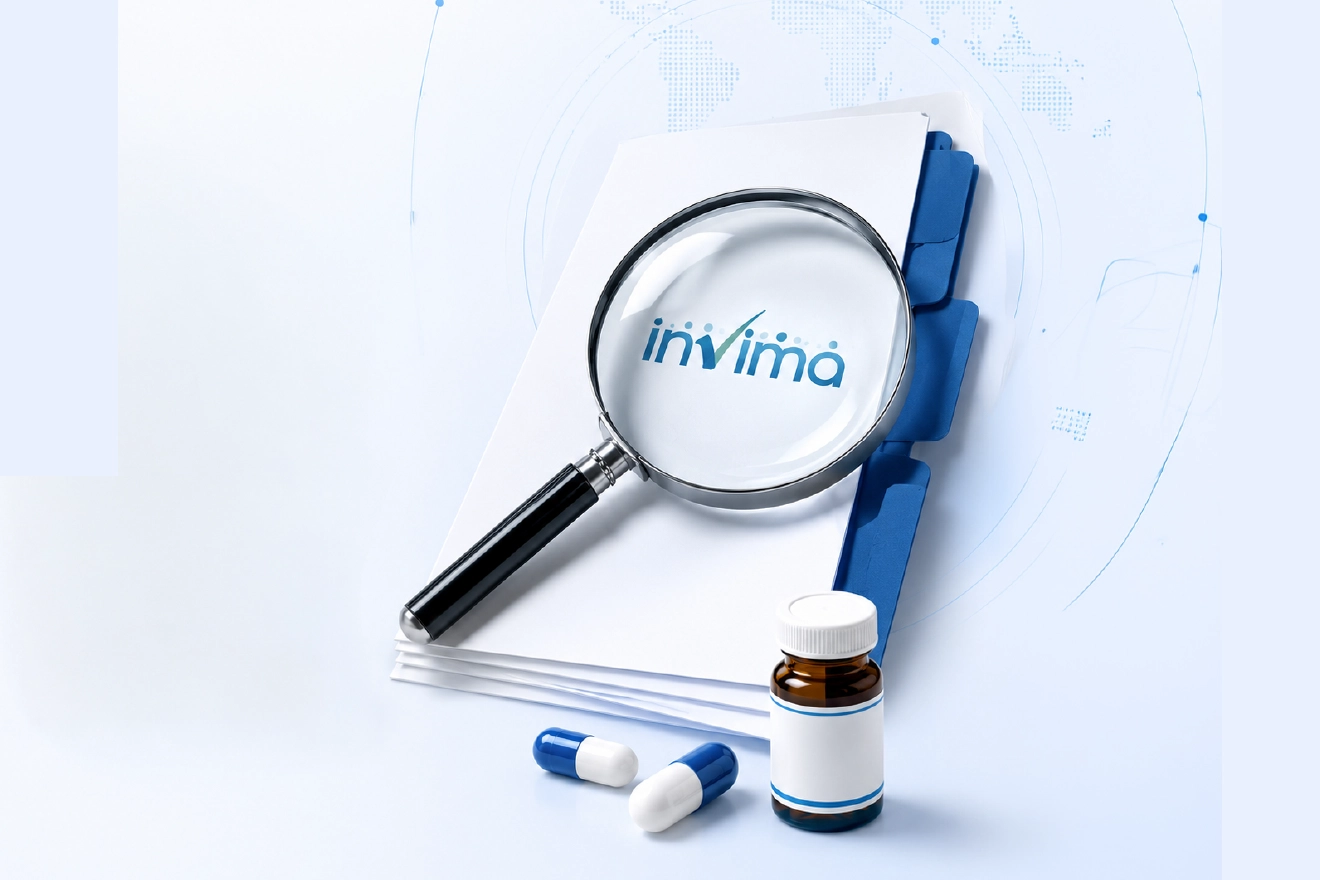
The magnifying glass is not a fifth analytical instrument of the same kind. It is what becomes possible when someone with accumulated experience in this specific pattern brings all four lenses together — and does so before the deal closes, not after regulatory receives the assignment. That means including regulatory expertise in the due diligence workstream, not the integration plan. It means mapping the sanitary history of every registration being acquired — not just its commercial trajectory. It means understanding that strategic planning before a transaction is not a regulatory formality. It is the discipline that determines whether the portfolio you acquire is the one you thought you were buying.
The surprises that surface during an MAH transfer at INVIMA are rarely new. They were visible before the deal closed — to anyone looking through the right instrument, with enough experience to know where to point it.
The question was never which lens to use. It was whether anyone in the room had learned to use all five together — and whether that person was at the table before the deal closed.
At Freyr, we support international pharma companies navigating MAH transfers and portfolio acquisitions in Colombia — before the regulatory complexity surfaces, not after. If your deal team is currently structuring an acquisition that includes INVIMA-registered products, the right moment to bring in regulatory expertise is now.