Consult


3 min read
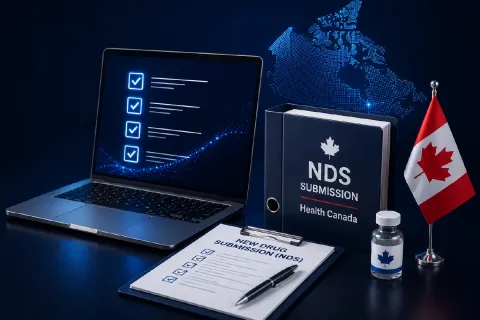
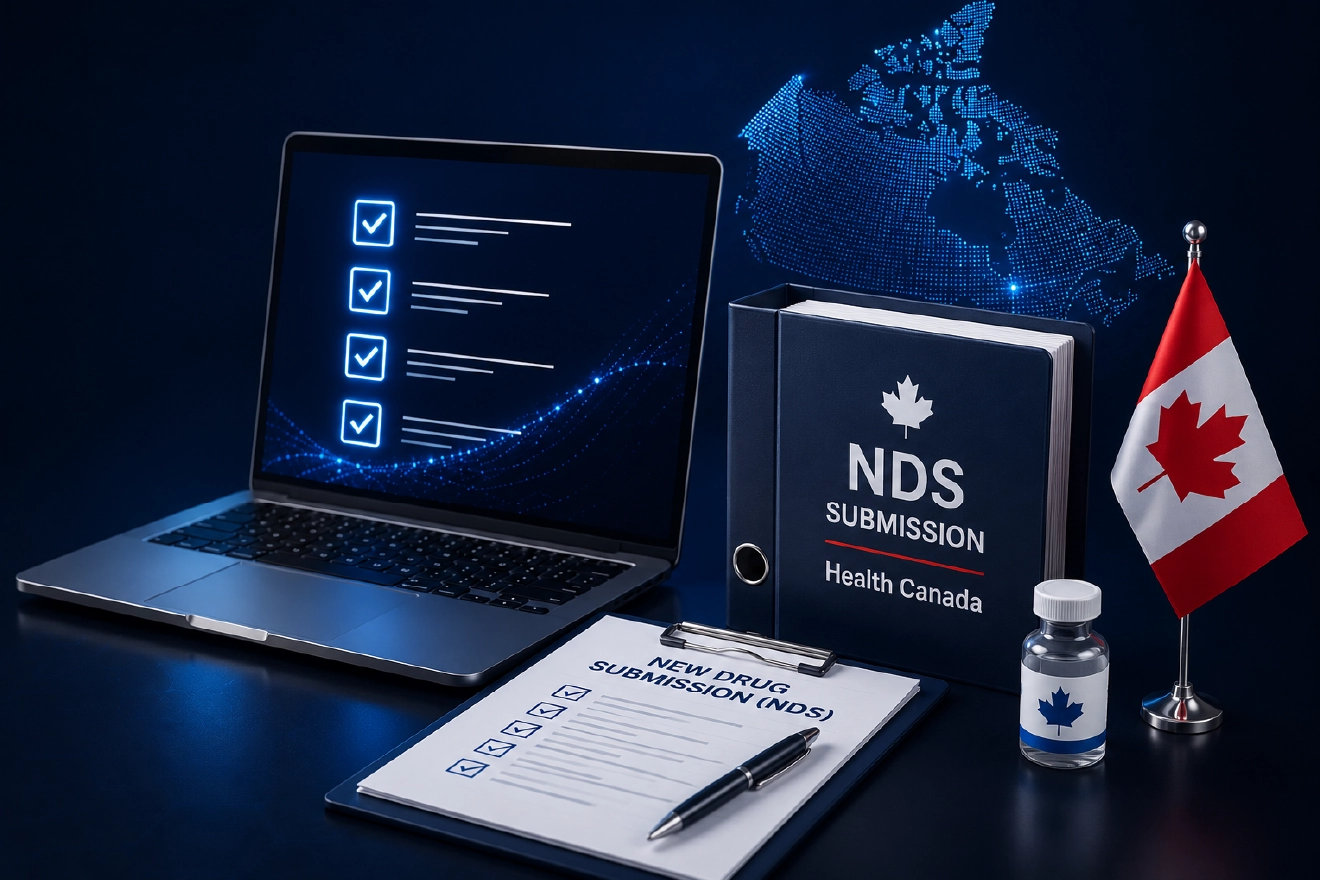
Canada is one of the world's most attractive pharmaceutical markets, with a well-developed Regulatory framework, a single-payer system, and a willingness to align with international science-based standards. For sponsors looking to commercialize a new drug, biologic, or radiopharmaceutical in Canada, the path runs through Health Canada-and specifically through the New Drug Submission (NDS) process.
Sponsors who treat Canada as a ‘mimic’ of their US filing often face avoidable clarifications and delays. Canada is like the US in many ways and meaningfully different in others. Understanding those differences is the difference between a smooth review and one filled with hurdles.
What Is a New Drug Submission (NDS)?
A New Drug Submission is the Regulatory dossier filed with Health Canada seeking authorization to market a drug in Canada. Pharmaceuticals are reviewed by the Therapeutic Products Directorate (TPD), while biologics and radiopharmaceuticals are reviewed by the Biologic and Radiopharmaceutical Drugs Directorate (BRDD). Approval is granted in the form of a Notice of Compliance (NOC).
The NDS is governed by the Food and Drugs Act and the Food and Drug Regulations.
When Is an NDS Required?
An NDS is generally required for any new drug being introduced to the Canadian market, including a new chemical entity, a new combination product, a new indication for an already-marketed drug, a new dosage form, a new route of administration, or a new strength. Generic drugs are filed via an Abbreviated New Drug Submission (ANDS); subsequent changes to an approved product use a Supplemental New Drug Submission (SNDS) or Notifiable Change.
Structure of an NDS
Health Canada follows the ICH Common Technical Document (CTD) format.
- Module 1 contains Canada-specific administrative information.
- Module 2 contains CTD summaries (Quality Overall Summary, Nonclinical Overview, Clinical Overview, and corresponding written/tabulated summaries).
- Module 3 covers Quality (CMC)
- Module 4 nonclinical study reports and
- Module 5 clinical study reports.
NDS submissions are filed in eCTD format.
Key Steps in the Review Process
Step 1-Pre-submission meeting (recommended). Sponsors are encouraged to engage Health Canada early through pre-submission meetings (Type A, B, or C) to align on study design, data expectations, or filing strategy.
Step 2-Submission. The dossier is filed in eCTD format via Health Canada's Common Electronic Submission Gateway (CESG) along with applicable fees.
Step 3-Screening. Health Canada conducts an administrative and content screening, typically within 45 calendar days, to confirm the submission is complete and reviewable.
Step 4-Review. Performance targets vary by submission type-approximately 300 days for standard NDS, 180 days for priority review, and 200 days for Notice of Compliance with Conditions (NOC/c). Reviewers may issue Clarification Requests (CRs), Notices of Deficiency (NoDs), or Notices of Non-Compliance (NoN-Cs) during this phase.
Step 5-Decision. If the dossier meets requirements, Health Canada issues a Notice of Compliance, and the product can be marketed in Canada.
Special Pathways and Programs
Health Canada offers several expedited or specialized pathways: Priority Review for serious or life-threatening conditions; Notice of Compliance with Conditions (NOC/c) for promising but not fully established benefit; Advance Consideration under collaborative review programs such as Project Orbis (oncology) and Access Consortium reviews; and the Special Access Program for pre-authorization access. Each has specific eligibility and documentation requirements.
Timelines and Practical Realities
Health Canada applies cost recovery fees for NDS reviews, with adjustments for small businesses and certain product categories. Sponsors should budget not only for the initial fee but also for downstream Supplemental NDS, Notifiable Changes, and Annual Notifications across the product's life. Performance review timelines are targets, not guarantees; clarification cycles can extend the calendar, especially for complex CMC packages or first-in-class biologics.
Beyond approval, market entry in Canada also involves activities outside Health Canada itself: pricing review by the Patented Medicine Prices Review Board (PMPRB) for patented products, and reimbursement assessments by CADTH (now Canada's Drug Agency) and INESSS in Quebec. Smart sponsors plan for these workstreams in parallel with the NDS review.
How Freyr Can Help
Freyr's Regulatory experts support sponsors throughout the NDS lifecycle. We plan and author NDS submissions, manage Module 1 and Canada-specific administrative requirements, prepare and submit Product Monographs, support pre-submission and clarification meetings with Health Canada, deliver bilingual labeling and translation services, and manage lifecycle activities including SNDS, Notifiable Changes, and Annual Notifications. For first-time entrants, we also benchmark existing US/EU dossiers against Canadian expectations through targeted gap assessments.
Canada is a market that rewards preparation. With the right strategy, your NDS becomes a smooth filing-not a learning curve.