Consult

3 min read
Packaging artwork has traditionally been viewed as an operational necessity, something that needs to be completed accurately before a product reaches the market.
That perspective is rapidly changing.
Today, packaging artwork sits at the intersection of regulatory compliance, manufacturing, supply chain and commercial operations. Every change to a label, carton, leaflet or shipper has the potential to affect production schedules, regulatory timelines, inventory availability and ultimately affect product supply.
Yet many pharmaceutical organizations continue to manage artwork through fragmented internal teams supported by multiple vendors and disconnected technology platforms. While this model may have worked when product portfolios were smaller and supply chains less complex, it is increasingly becoming a barrier to agility and operational excellence.
The question is no longer "Should artwork be outsourced?"
The more strategic question is:
"Should the entire artwork ecosystem—including technology—be managed by one accountable partner?"
The answer, for an increasing number of global pharmaceutical companies, is yes.
Artwork Has Become a Strategic Business Function
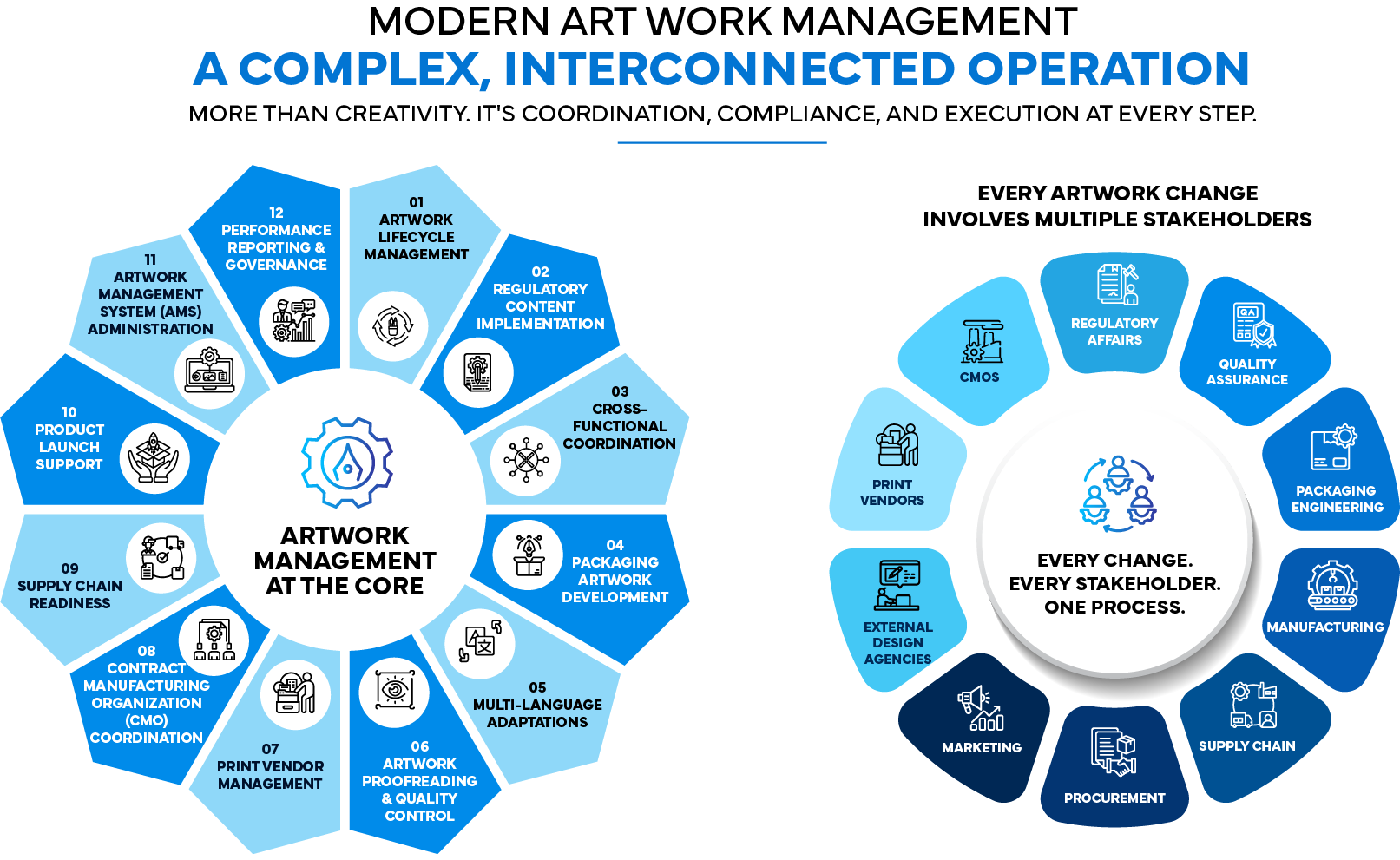
Artwork is no longer limited to creating packaging files.
A modern artwork organisation is responsible for coordinating dozens of interconnected activities, as shown in the graphic below.
The Hidden Cost of Keeping Artwork Operations In-House
Many pharmaceutical companies have built internal artwork organizations over several years. These teams often perform exceptionally well, but they also face structural challenges that become more pronounced as organizations grow.
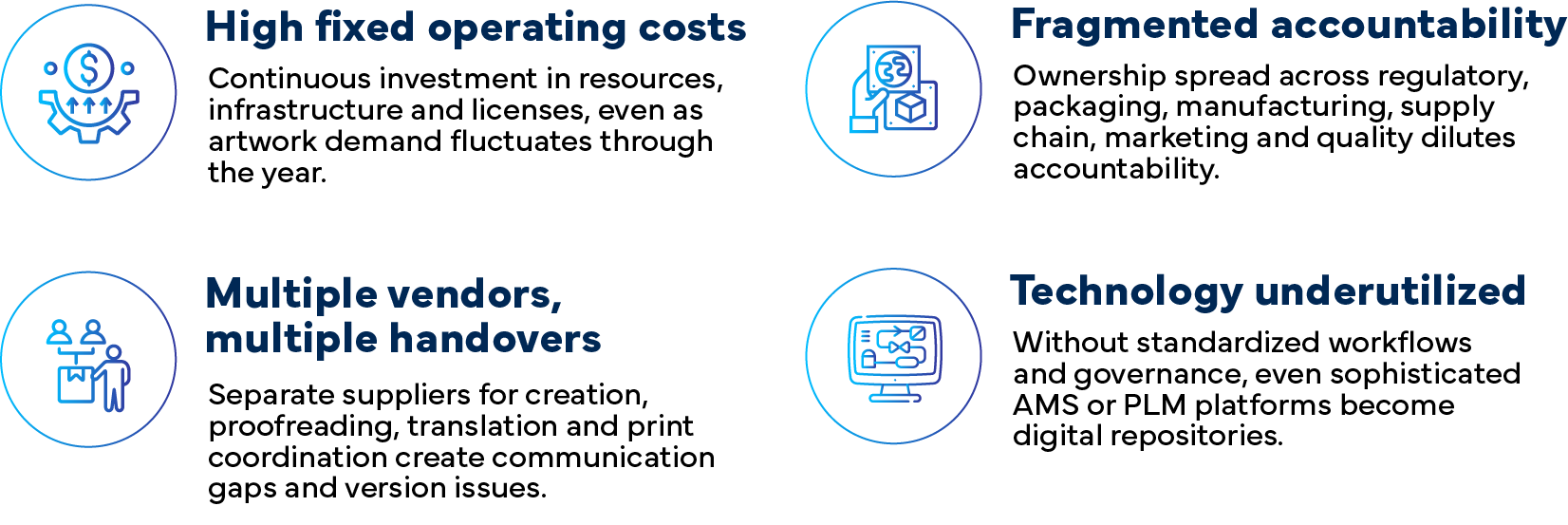
Organisations frequently utilise only a fraction of the capabilities they have purchased.
Why Leading Pharmaceutical Companies Are Moving Toward End-to-End Managed Services
A growing number of pharmaceutical organizations are replacing fragmented outsourcing models with a fully integrated operating model.
Instead of outsourcing individual activities, they outsource the complete artwork ecosystem to a single strategic partner.
This includes:
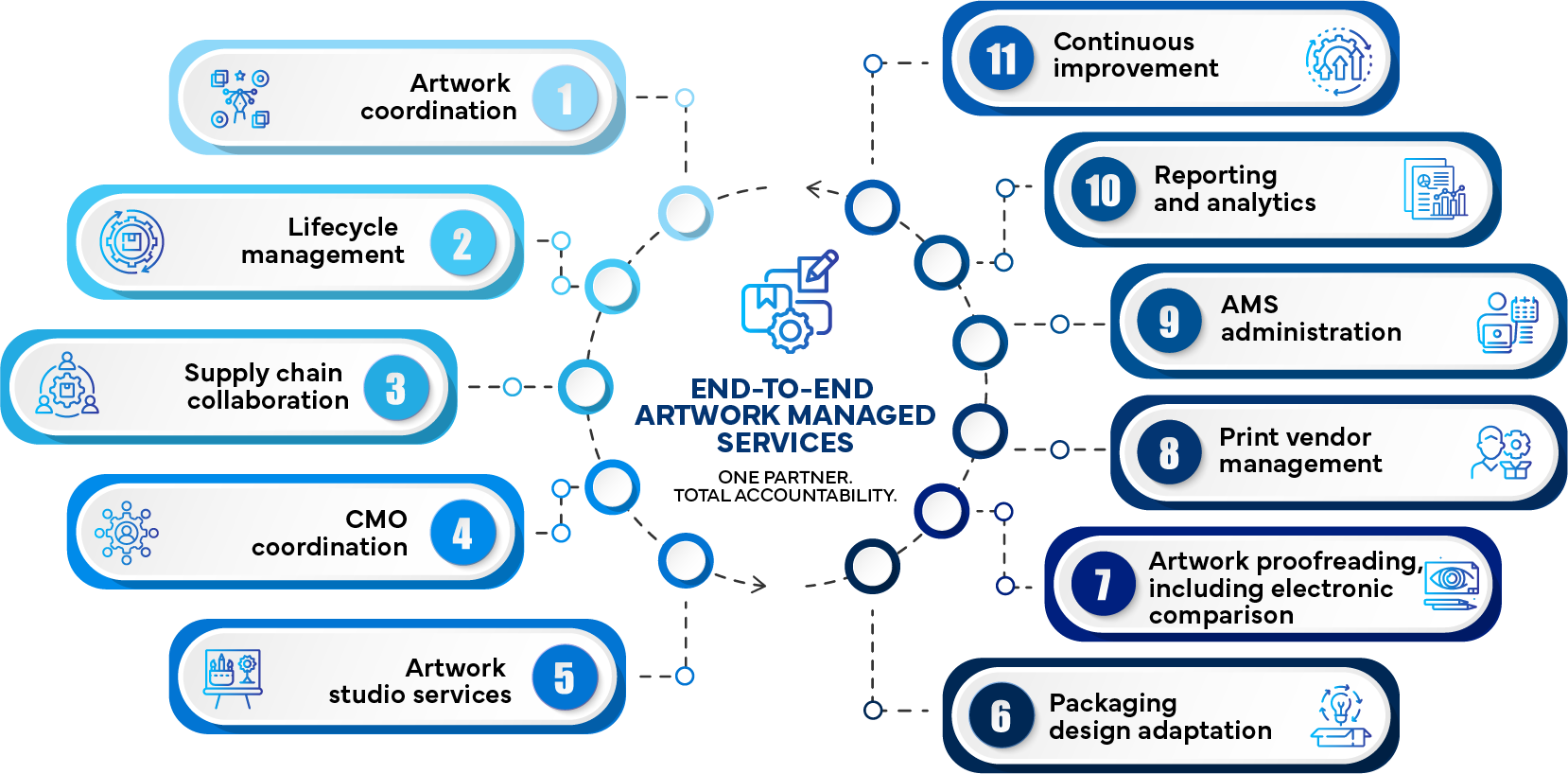
Rather than managing multiple vendors, the organization works with one accountable partner responsible for quality, timelines, governance and technology.
The outcome is not simply operational efficiency—it is greater business agility.
The Strategic Advantage of Combining Services and Technology
One of the most significant developments in artwork outsourcing is the convergence of managed services and technology.
Historically, companies selected one vendor for software and another for operational support. While this appears flexible, it often creates unnecessary complexity.
When workflow issues arise, software providers point to operational practices, while service providers point to system limitations. The pharmaceutical company becomes the coordinator between two suppliers.
A unified model eliminates this challenge.
When the same organization provides both the Artwork Management System and the managed services, accountability becomes clear. Process improvements immediately translate into workflow enhancements. Operational experience directly influences technology development.
Automation is driven by real business requirements rather than generic software roadmaps. This creates a continuous improvement cycle where technology evolves alongside the operation.
Beyond Cost Savings: Building a Competitive Advantage
Executive leadership increasingly recognizes that artwork outsourcing should not be evaluated solely on labour arbitrage.
Its true value lies in enabling the business to respond faster to change.
An integrated artwork partner enables organizations to:
- Accelerate regulatory implementation
- Support faster product submissions and launches
- Scale operations during demand peaks
- Standardize global processes
- Improve Right-First-Time quality
- Reduce operational risk
- Enhance compliance readiness
- Increase visibility through real-time KPIs
- Improve collaboration across internal teams and external partners
Perhaps most importantly, internal teams can shift their focus from managing artwork transactions to driving strategic initiatives such as portfolio expansion, digital transformation, regulatory strategy and supply chain resilience.
Artwork Is Becoming a Supply Chain Capability
Artwork delays no longer affect only the artwork department.
They affect manufacturing schedules.
- Inventory availability.
- Market launches.
- Revenue realization.
- Patient access.
This is why artwork management should be viewed as an integral component of the pharmaceutical supply chain rather than an isolated creative function.
Organizations that continue operating fragmented artwork processes may find themselves struggling with increasing regulatory complexity, growing portfolios, and expanding global manufacturing networks.
Those that invest in integrated operating models will be better positioned to respond quickly and consistently.
What Should Pharmaceutical Companies Look for in an Outsourcing Partner?
Selecting the right partner involves much more than evaluating creative capability.
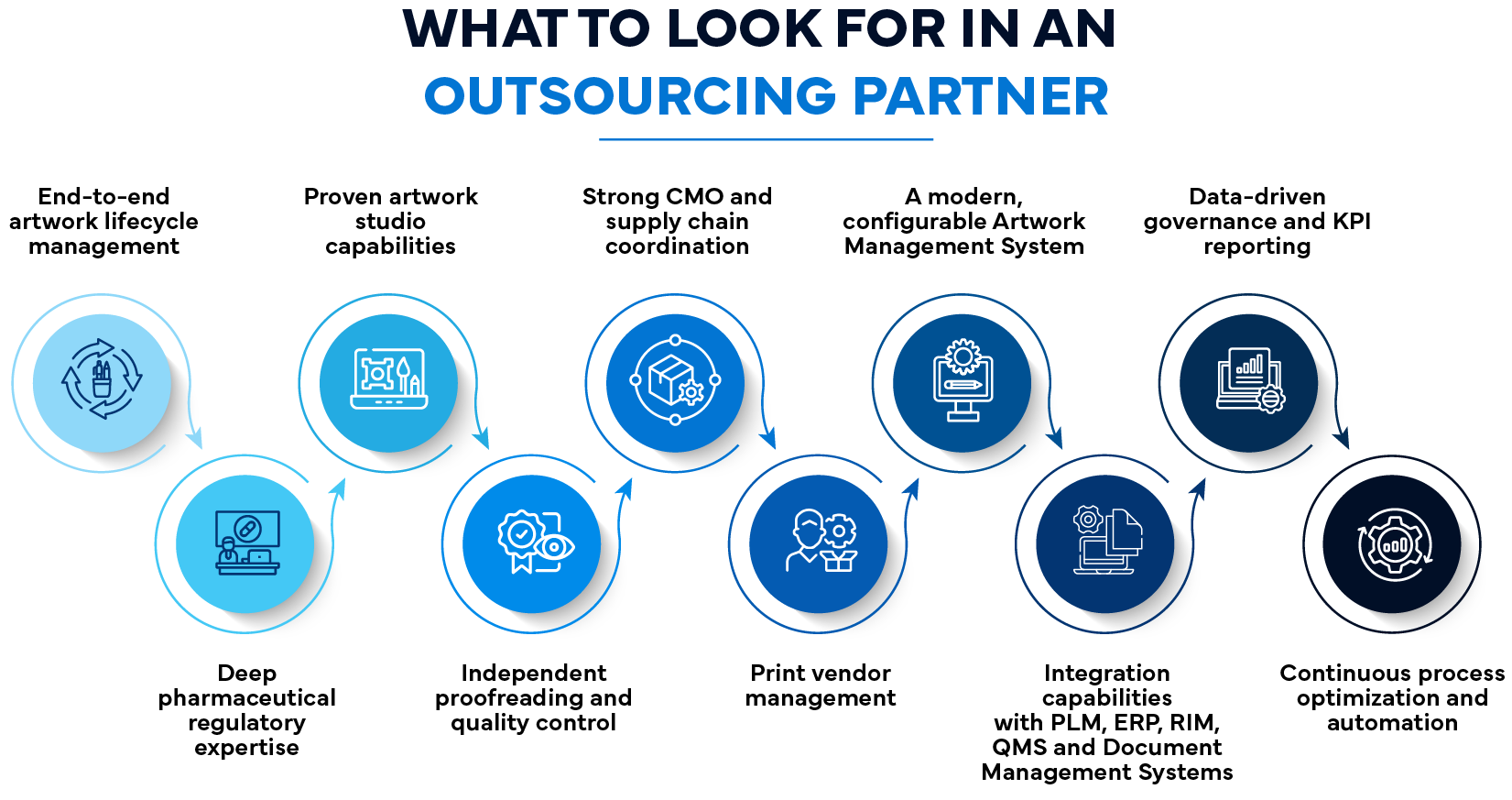
Most importantly, they should seek a partner capable of delivering both operational excellence and digital transformation.
Executive Perspective
Packaging artwork has become a critical operational function, not just a creative task. As portfolios grow and supply chains globalize, fragmented artwork operations create unnecessary cost and risk. The future lies in integrated managed services powered by intelligent technology, where the same partner delivers both the AMS and operations, turning technology into an engine for compliance, faster launches, and continuous improvement.
Is your organization still juggling multiple vendors, or moving toward an integrated model? We would be interested to hear how others are approaching this transformation.