Consult


2 min read
The UAE pharmaceutical Regulatory landscape is undergoing one of its biggest transformations in recent years. The government has officially shifted a significant portion of pharmaceutical Regulatory responsibilities from the Ministry of Health and Prevention (MOHAP) to the Emirates Drug Establishment, a move that is expected to reshape how pharmaceutical companies register, launch, and maintain medicinal products in the UAE.
For pharmaceutical manufacturers, Marketing Authorization Holders (MAHs), importers, and Regulatory teams, this shift signals a new era of centralized pharmaceutical oversight, faster processes, and stricter compliance expectations.
Why is the UAE shifting Regulatory responsibilities?
The UAE government introduced Emirates Drug Establishment in 2023 as the country’s dedicated federal authority for regulating pharmaceutical and medical products.
In January 2026, the Ministry of Health and Prevention officially announced the transfer of 44 pharmaceutical services to EDE as part of a broader effort to:
- Simplify Regulatory processes
- Reduce bureaucratic delays
- Improve customer experience
- Centralize pharmaceutical decision-making
- Strengthening governance across the healthcare ecosystem
The move also aligns with the UAE’s Zero Government Bureaucracy Program, which focuses on improving operational efficiency and accelerating service delivery.
What services have been transferred to EDE?
The transfer significantly impacts the medicinal product's Regulatory activities.
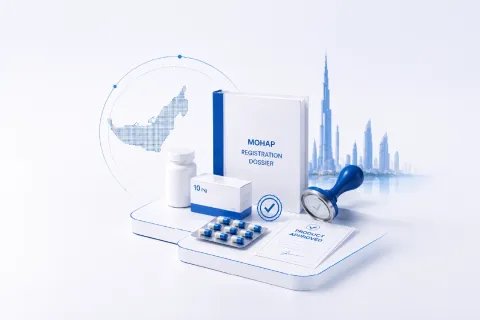
Product Registration & Renewals
EDE now overseas:
- Registration of conventional pharmaceutical products
- Registration of pharmaceutical products for general sales
- Renewal of product registrations
- Registration of products derived from natural sources
- Manufacturer registration and renewals
This makes EDE a critical authority for companies planning UAE drug registration.
Pricing and Repricing Approvals
Pharmaceutical companies must now work with EDE for:
- Drug pricing approvals
- Repricing requests
- Price list issuance
- Controlled medicine pricing approvals
This directly impacts market access planning and commercialization timelines.
Pharmacovigilance Oversight
EDE now manages key pharmacovigilance functions such as:
- PV plan approvals
- PV officer approvals
- adverse event reporting requirements
Companies must ensure their pharmacovigilance systems remain aligned with updated UAE requirements.
Import and Export Permissions
EDE now handles:
- Medicine import permits
- Export permits
- Raw material import approvals
- Narcotic import approvals
- Shipment release certificates
This is especially important for global manufacturers relying on cross-border supply chains.
Manufacturing and Licensing Oversight
The Regulatory shift also includes:
- Pharmaceutical facility licensing
- Warehouse approvals
- Manufacturer licensing
- GMP certifications
- Distribution compliance
This creates stronger oversight for companies operating local facilities in the UAE.
What remains under MOHAP?
Not every pharmaceutical service has moved to EDE.
Ministry of Health and Prevention still manages certain controlled medicine services, including:
- Narcotic prescription books
- Hospital narcotic approvals
- Quota approvals for controlled substances
Regulatory teams must clearly understand which authority handles each process.
What does this mean for pharmaceutical companies in 2026?
This Regulatory shift creates both opportunities and risks.
Opportunities:
- Faster approvals
- Centralized submissions
- Better Regulatory Transparency
- Improved digital workflows
Challenges:
- Understanding new authority responsibilities
- Adopting submission strategies
- Managing new compliance expectations
- Preventing approval delays during transition periods
Companies that continue using outdated MOHAP pathways may face delays.
How should companies prepare?
To stay compliant, pharmaceutical companies should:
- Review of all UAE Regulatory workflows
- Identify which services now fall under EDE
- Update submission strategies
- Strengthen lifecycle management planning
- Monitor pricing and PV requirements closely
Final Thoughts
The UAE is positioning itself as a stronger pharmaceutical hub through Regulatory modernization. The transfer of 44 services to Emirates Drug Establishment signals a long-term shift toward centralized and faster pharmaceutical regulation.
Companies that adapt early will be better positioned for faster approvals and smoother market entry.
Need help navigating UAE Regulatory changes?
Freyr supports pharmaceutical companies with:
- UAE product registration
- EDE submission support
- pricing approvals
- pharmacovigilance compliance
- lifecycle management
- labeling review
- market access planning
Talk to our Regulatory experts today to streamline your UAE submissions and accelerate approvals.