Consult

2 min read
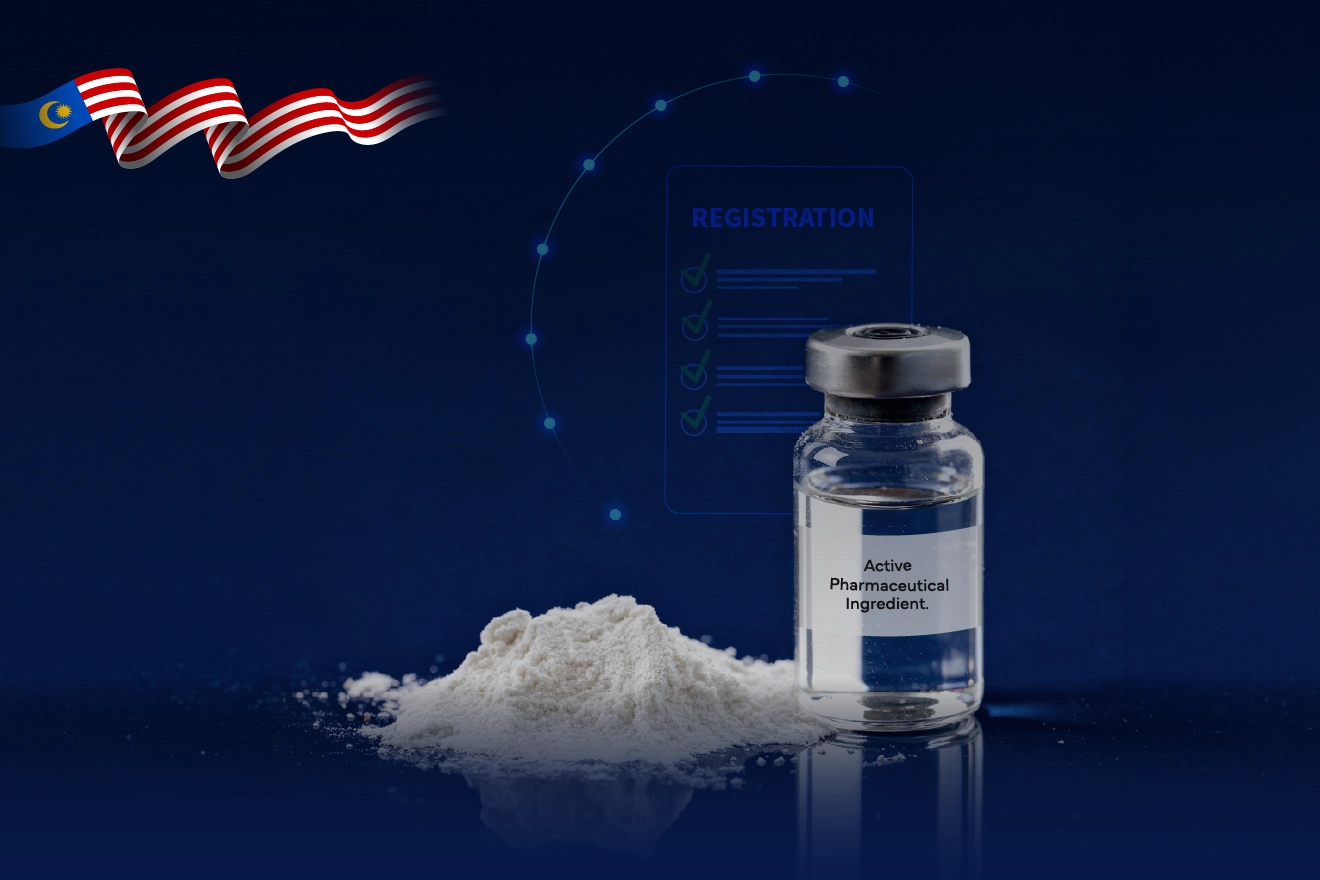
The registration process for Active Pharmaceutical Ingredients (API) in Malaysia is administratively integrated with the registration of the finished pharmaceutical product. A separate registration of APIs is not required, but comprehensive API information must be submitted as part of the product registration dossier.
The API Registration Process in Malaysia is regulated by the National Pharmaceutical Regulatory Agency (NPRA) and requires compliance with stringent quality, safety, and documentation standards.
Below is a detailed, step-by-step breakdown:
1. Assess Applicability and Prepare Application
- API information is required for all pharmaceutical products (excluding biologics, traditional, veterinary, supplements, and export-only) intended for the Malaysian market.
- New applications, variations, and some renewals (especially for products containing scheduled poisons) require API information submission.
- Applicants must refer to Appendix 11 of the Drug Registration Guidance Document (DRGD) and the latest relevant NPRA guidance while planning their Malaysia API registration strategy that should be integrated into finished pharmaceutical product registration.
2. Select Submission Method for API Documentation
There are 3 main API submission methods:
- Drug Master File (DMF): Comprehensive confidential file submitted by the API manufacturer.
- Certificate of Suitability (CEP): Accepted if the API holds a valid CEP (e.g., EDQM).
- ASEAN Common Technical Dossier (ACTD/Part II-S): For generic APIs without DMF or CEP, submit relevant ACTD sections.
Choice of submission route must be made at the outset, as changes are not permitted after submission for screening.
3. Collate the Required Documents
Key sections for API submission include:
- General information (nomenclature, structure, physicochemical data)
- Manufacturer details (name, address, site)
- Manufacturing process details (including reprocessing, intermediates, flowcharts, controls)
- Specifications and analytical procedures
- Batch analysis data and certificates of analysis
- Justification of specifications
- Reference standards and materials
- Stability data (minimum three primary batches)
- GMP certificate for the API manufacturer
- Container closure system information
- Additional documents (e.g. CEP, DMF, Certificate of Analysis from finished product manufacturer)
Note: For products using approved APIs, a Declaration Letter referencing previous DMF submissions is required.
4. Online Submission via QUEST System
- Submit the full product registration dossier (including all API documentation as Part II-S) through the NPRA QUEST3+ system.
- Select the API manufacturer from the QUEST database; once selected, changes are not allowed post-submission.
5. Screening by NPRA
- NPRA will screen the application for completeness and correctness.
- Applications with major deficiencies may be rejected at this stage.
6. Evaluation and Assessment
- The NPRA evaluates the API section for compliance with standardized quality, safety, and GMP requirements.
- Assessment considers technical requirements, manufacturing site consistency, previous evaluations by recognized Regulatory authorities (e.g., PIC/S, WHO, US FDA), and analytical data.
- For anti-infectives and high-risk APIs, additional scrutiny may apply.
- No separate fees for API—cost incorporated into the overall product registration fee.
- The agency also reviews the submitted ACTD dossier Malaysia requirements to ensure alignment with ASEAN Regulatory standards.
7. Post-Evaluation: Outcome
- If approved, the finished product (with defined API, source, and manufacturer) is registered.
- Post-registration, any changes to API manufacturer, site, or submission option require formal variation and prior NPRA approval.
- Random sampling, post-marketing surveillance, and ongoing stability and GMP compliance apply.
8. Post-Marketing Requirements
- Monitor for adverse events, complaints, and possible recalls.
- Random sampling/testing of APIs may be conducted as part of NPRA’s post-marketing surveillance.
- Ongoing compliance with specifications and GMP is mandatory.
Conclusion
The API Registration Process in Malaysia requires careful documentation planning, Regulatory strategy, and strict adherence to NPRA requirements throughout the product lifecycle.
With extensive expertise in Regulatory affairs, dossier preparation, and ASEAN compliance requirements, Freyr Solutions supports pharmaceutical companies with end-to-end API Regulatory support, Malaysia API registration, and strategic submission readiness aligned with NPRA expectations.
Click here to know more about our services: Pharmaceutical Product Registration in Malaysia
To learn more about how Freyr can support your Regulatory needs in Malaysia, fill out the contact form or write to us at malaysia@freyrsolutions.com.