Consult

5 min read
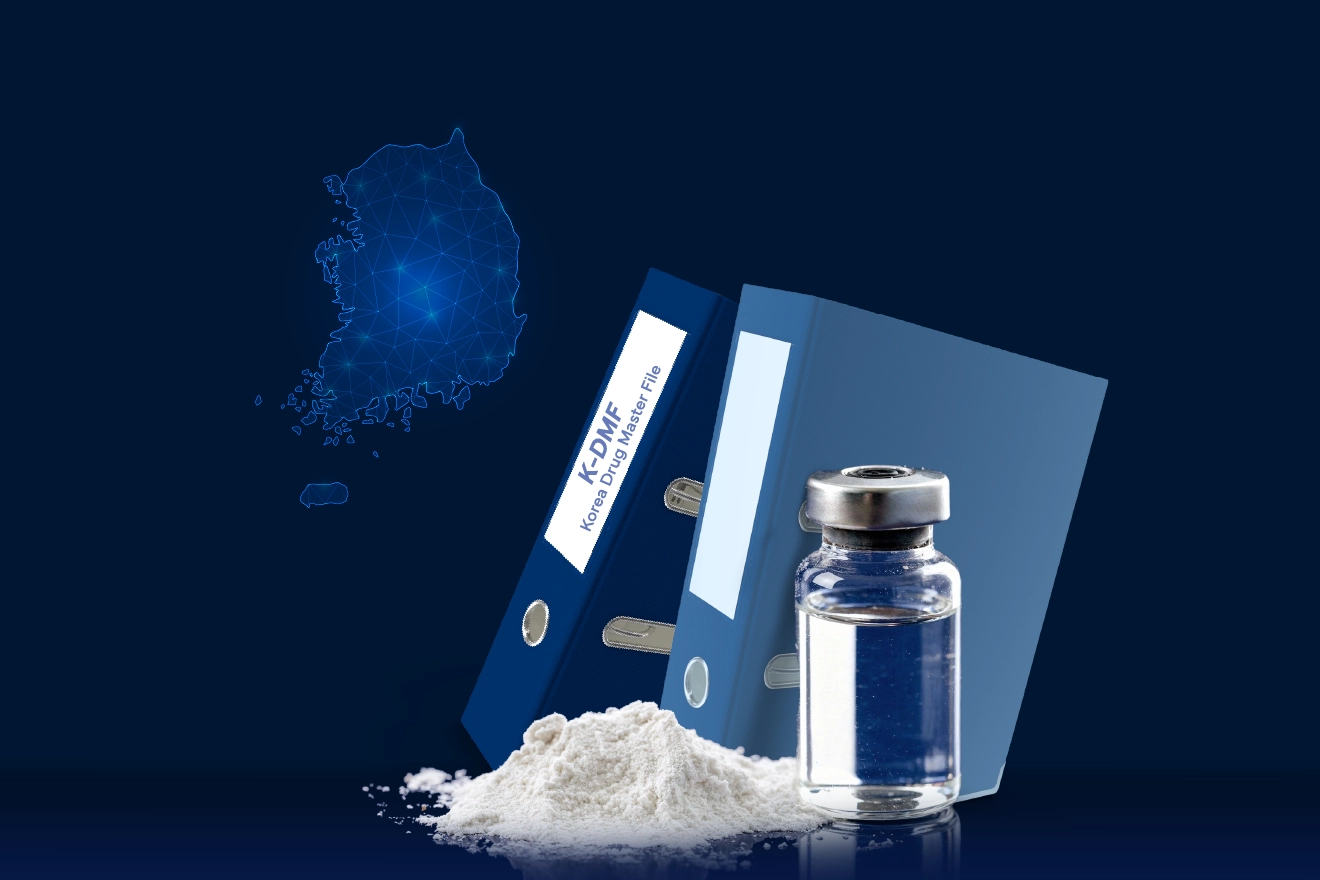
South Korea continues to be an important market for pharmaceutical companies looking to expand across Asia, but understanding K-DMF Requirements in South Korea is essential before supplying Active Pharmaceutical Ingredients (APIs) to the market. The Korean Drug Master File (K-DMF) system, administered by the MFDS, establishes the standards that manufacturers must meet to demonstrate the quality, safety, and efficacy of their APIs.
For overseas manufacturers pursuing South Korea API Registration, early planning and a thorough understanding of MFDS API Requirements can help reduce delays, improve submission readiness, and support a smoother pathway to market.
To help unpack what this looks like in practice, we sat down with Kyeomju Nah, a Regulatory Expert with 12 years of experience in pharmaceutical regulatory affairs, to walk us through the key requirements, common pitfalls, and what manufacturers should prioritize from the outset.
A conversation with Kyeomju Nah, Regulatory Expert
Let's start with the basics — what exactly is the K-DMF system, and who needs to care about it?
Kyeomju Nah: The K-DMF exists to make sure that every API used in medicinal products sold in South Korea meets the quality, safety, and efficacy standards set by the MFDS — the Ministry of Food and Drug Safety.
One thing I see trip up overseas manufacturers fairly often is the assumption that these requirements only apply to APIs made in Korea. That's not how it works. The K-DMF framework covers all APIs designated by the MFDS as subject to registration entering the South Korean market, regardless of where they're manufactured. So, if you're planning to supply a regulated API to South Korea, K-DMF compliance has to be part of your Regulatory strategy from day one.
How do you actually make a K-DMF submission to the MFDS?
Kyeomju Nah: Everything goes through the MFDS Integrated Pharmaceutical Information System — known as ‘의약품안전나라(Nedrug), the online portal at https://nedrug.mfds.go.kr/ . Paper submissions aren't accepted, and neither is email. The Electronic Civil Complaint Application system handles everything: initial registrations, modifications, and cancellations.
Now, the submission itself can be handled either by the overseas API manufacturer directly or through an authorised representative. But either way, it's the manufacturer who remains responsible for keeping the K-DMF current and compliant.
What does the technical dossier actually need to contain?
Kyeomju Nah: The dossier is really the foundation of the whole application, and the MFDS expects it to be prepared as a CTD Dossier South Korea submission using the Common Technical Document (CTD) format. At a high level, you're looking at:
- Administrative documents — your Letter of Access or authorisation, application form, and manufacturer details
- Drug substance information — the manufacturing process, flow charts, facility details, process controls, and a raw materials list
- Quality documents — certificates of analysis, specifications, test methods, and analytical validation data
- Impurity information — your impurity profile, identification and qualification data, residual solvents, and crucially, comprehensive risk assessment data for mutagenic impurities (such as Nitrosamines) and elemental impurities in line with recent strict MFDS updates.
- Stability data — study reports prepared in line with MFDS-accepted protocols
- GMP compliance evidence — documentation from a recognized authority confirming cGMP status
- Safety data — nonclinical or clinical information, where applicable
- Korean translations — Key data such as specifications, test methods, and CTD Module 2 dossiers must be submitted in Korean. While original English documents (like stability raw data or validation reports) are accepted, the MFDS strictly requires crucial regulatory documents and summaries to be in Korean.
That last point is one people often underestimate. Incomplete or inaccurate translations — particularly for specifications, test reports, and GMP documents — are a common cause of review delays.
Walk us through what the registration process actually looks like step by step.
Kyeomju Nah: The process has four key stages — and each one carries its own responsibilities.
- Initial Registration: It starts with submitting the complete K-DMF dossier electronically. Along with that, you'll need to provide a Letter of Access — this is what authorizes the MFDS to reference your DMF data when reviewing related drug applications.
- Review Process: Once the submission is in, the MFDS conducts both an administrative and a technical review. Don't be surprised if they come back with requests for additional data or clarifications during this stage — that's fairly standard practice, especially regarding impurity profiles and validation details..
- Change Notification: What I always remind manufacturers is that approval isn't the finish line. If anything changes, the modification must be managed as either a 'Change Registration' (approval required before implementation) or a 'Change Notification' (report within a specified timeframe), depending on the impact on API quality.. The relevant marketing authorisation holders also need to be informed.
- Cancellation: If you're no longer supplying the API to the Korean market, you can't simply let the registration lapse. A formal cancellation must be submitted through the online system, along with all required termination documentation.
Are there any special situations or exceptions manufacturers should know about?
Kyeomju Nah: A couple of things worth flagging. Under certain contract manufacturing arrangements, some GMP documentation requirements may be partially waived — but these exemptions have to be well-justified, and they're subject to MFDS review and approval. You can't assume they'll be granted.
Also, if you're concerned about protecting sensitive manufacturing information, there is a mechanism for that. Certain confidential sections of the DMF can be submitted directly to the MFDS, keeping that information protected while still meeting the Regulatory requirements. That's particularly relevant for overseas manufacturers who are understandably cautious about sharing proprietary process data.
Can you walk us through a real-world example of K-DMF support in action?
Kyeomju Nah: Absolutely. We recently worked with a Hungary-based pharmaceutical company that needed to complete a Regulatory transfer and establish K-DMF holding arrangements for its API in South Korea.
The challenge wasn't just technical — it was sequencing. The client wasn't sure whether the Marketing Authorization transfer needed to be completed before addressing pending variations, or whether those could run in parallel. That kind of ambiguity, if left unresolved, can translate into real delays and compliance risks.
So, what did Freyr's involvement actually look like?
Kyeomju Nah: We started with a detailed assessment of their Regulatory situation — understanding where they were in the process, what submissions were outstanding, and what documentation they had versus what was still needed.
From there, we built out a clear Regulatory roadmap: the right sequence of activities, the documentation requirements at each stage, and what to prepare ahead of each MFDS touchpoint. A lot of the value came from getting that groundwork right before anything was submitted, rather than discovering gaps mid-process.
What was the outcome for the client?
Kyeomju Nah: They came away with much greater clarity and confidence in how to proceed. The structured approach reduced uncertainty, minimized the risk of approval delays, and significantly cut down on rework — because documentation was ready and aligned with MFDS expectations from the start. Ultimately, it made for a smoother, more efficient interaction with South Korean Regulatory authorities.
Any final advice for overseas manufacturers approaching this for the first time?
Kyeomju Nah: My advice would be to start early and view K-DMF Requirements in South Korea as an ongoing Regulatory commitment rather than a one-time submission exercise. The documentation expectations are detailed, translation requirements require careful planning, and the MFDS review process is comprehensive. Manufacturers that build compliance into their long-term Regulatory strategy are generally better positioned to achieve successful submissions and maintain compliance throughout the product lifecycle.
About The Author:
 | I help clients succeed by guiding them through Regulatory processes, ensuring their products get approved and launched successfully. |
Kyeomju Nah is a Regulatory Expert with 12 years of experience in the pharmaceutical industry. She specializes in Regulatory affairs for pharmaceutical products and has extensive experience in various aspects of Regulatory affairs, including submissions and approvals for NDA, ANDA, DMF(API), and managing lifecycle aspects such as variations, periodic reports, and renewals.
To learn more about Freyr’s Regulatory support services, fill out the contact form or write to us at sales@freyrsolutions.com.