Beraten lassen


5 Min. Lesezeit
The global transition to electronic common technical document (eCTD) 4.0 is steadily taking shape, and 2026 has brought several important developments for pharmaceutical and biopharmaceutical companies managing Regulatory submissions. With updated implementation specifications from ICH, revised technical requirements from the US FDA and a clearer adoption roadmap from the European Medicines Agency (EMA), Regulatory teams now have greater visibility into how the transition is progressing.
But perhaps the more interesting question is what these developments mean for day-to-day submission operations.
For companies managing multiple applications across regions, adopting eCTD 4.0 entails decisions regarding submission planning, document lifecycle management, metadata governance, validation processes, and the continued use of eCTD v3.2.2.
The real measure of readiness is how effectively these evolving requirements can be incorporated into existing Regulatory operations while maintaining continuity across ongoing and future Regulatory submissions.
2026 is bringing greater clarity to the eCTD 4.0 transition
A series of Regulatory updates this year is helping define the next phase of implementation. In June 2026, the International Council for Harmonisation (ICH) endorsed version 1.7 of the eCTD v4.0 Implementation Guide and version 1.0.3 of the associated Controlled Vocabulary Package. These updates provide further direction for implementing the harmonised technical standard.
The US FDA, which has accepted new Regulatory applications in since September 16, 2024, continued to refine its regional specifications. On September 28, 2026, the agency updated its regional Module 1 Implementation Guide and controlled vocabulary package. since September 16, 2024, continued to refine its regional specifications. On September 28, 2026, the agency updated its regional Module 1 Implementation Guide and controlled vocabulary package.
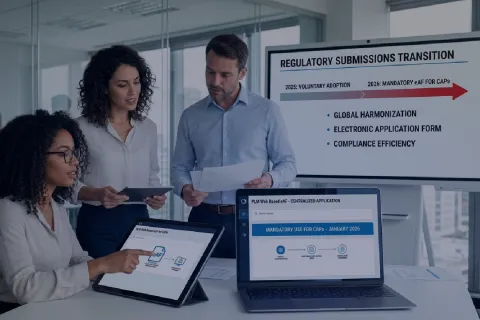
Meanwhile, EMA's July 2026 announcement provided greater clarity on the European transition. Since December 22, 2025, applicants have been able to optionally submit new Marketing Authorisation Applications (MAAs) for Centrally Authorised Products (CAPs) in eCTD v4.0. EMA has indicated that the format will be strongly recommended for these applications from Q1 2027, with mandatory use planned from Q1 2028.
Importantly, eCTD v3.2.2 continues to be accepted during the transition. These developments reflect progress toward broader adoption, but they also highlight an important operational reality: global Regulatory teams will need to work with different submission standards, implementation timelines and regional requirements for some time.
For sponsors, this calls for a more coordinated approach to submission planning across markets.
Managing eCTD 3.2.2 and 4.0 together is becoming an operational priority
One of the most practical considerations during the transition is the continued coexistence of eCTD v3.2.2 and v4.0. Consider a pharmaceutical company managing an established product portfolio alongside new development programmes. Its existing applications may continue under eCTD v3.2.2, while certain new applications may be eligible for eCTD v4.0 depending on the receiving agency and applicable requirements. Both submission streams may need to be supported within the same Regulatory operations function.
This raises questions that go beyond publishing software. How should teams manage different technical specifications? How will document and metadata requirements be governed across submissions? What additional quality controls or training may be needed? And how should companies plan for the eventual transition of existing applications?
Forward compatibility is particularly relevant here.
Although eCTD v4.0 is available for new applications in the US, FDA has not yet made forward compatibility for existing v3.2.2 applications generally available in production. EMA is conducting forward compatibility testing for existing centrally authorised products, with implementation timelines dependent on the outcomes of these activities. This distinction matters when planning submissions across an existing Regulatory portfolio.
An organisation may be technically capable of producing eCTD v4.0 submissions while still needing to maintain its established v3.2.2 workflows for ongoing applications. The challenge, therefore, is to establish an operating model that appropriately supports both standards, with clear regional requirements, consistent oversight, and well-defined responsibilities.
For a deeper perspective on this transition, explore Freyr's white paper: Running eCTD 3.2.2 and 4.0 at the Same Time: What Global Regulatory Teams Should Expect in the Years In Between
What does operational readiness look like in practice?
As eCTD 4.0 adoption progresses, submission teams have an opportunity to examine whether their existing processes are equipped to support the new requirements. A few areas deserve particular attention.
Maintaining control over evolving standards
With ICH and individual Regulatory agencies updating implementation guides, controlled vocabularies and validation requirements, organisations need a reliable process for tracking relevant changes. This involves understanding which specifications apply to each submission, how updates affect publishing processes, and when internal procedures or system configurations need to be revised. The objective is to keep Regulatory intelligence and submission execution closely aligned.
Strengthening metadata and document lifecycle governance
eCTD 4.0 introduces enhanced metadata structures and lifecycle management capabilities. These features place greater importance on how submission information is identified, maintained and exchanged across systems and teams. Regulatory operations, document management and publishing teams need a shared understanding of metadata ownership, document relationships and quality-control responsibilities. Clear governance can support more consistent preparation of submissions, particularly for organisations managing complex global portfolios.
Integrating validation into submission planning
Technical validation is an established part of Regulatory publishing, but the transition to eCTD 4.0 introduces new specifications and region-specific considerations.For example, EMA's updated EU eCTD v4.0 Validation Criteria v1.1 became applicable in July 2026.Submission teams should evaluate whether their tools, validation workflows and quality-control processes align with the requirements applicable to their planned filings. This includes testing submission scenarios, documenting validation outcomes and ensuring that issues can be addressed before dispatch.
Preparing the people and processes behind the submission
Technology readiness is only one part of the transition. Regulatory Affairs, Publishing, CMC, Medical Writing, Quality and technology teams may all contribute to submission preparation and execution. As standards evolve, responsibilities for document preparation, metadata management, quality review, validation and submission lifecycle activities need to remain clear. Structured training, updated operating procedures and practical testing can help teams understand how eCTD 4.0 requirements affect their respective roles.
A practical approach: Start with the submissions already in your pipeline
For companies evaluating eCTD 4.0 readiness, a useful starting point is to review their planned Regulatory submissions over the next six to twelve months. Rather than approaching the transition as one organisation-wide technology exercise, teams can begin with representative filing scenarios. For each application, consider the receiving Health Authority, applicable eCTD format, current agency specifications, document and metadata requirements, validation criteria and internal execution responsibilities.
For organisations managing existing applications, it is equally important to understand the current application lifecycle and monitor the relevant agency's forward-compatibility provisions. This exercise can help distinguish requirements that need immediate attention from those that should form part of longer-term transition planning. It may also reveal opportunities to improve coordination between Regulatory strategy, submission management, publishing and document governance.
Importantly, this approach allows readiness activities to be aligned with actual submission priorities and regional implementation schedules.
Making Regulatory submission operations ready for what comes next
The introduction of eCTD 4.0 represents a meaningful evolution in electronic Regulatory submissions. Its enhanced structures and lifecycle capabilities create opportunities for more consistent information management across the Regulatory lifecycle.
However, realising those benefits requires a practical understanding of how the standard will operate within existing Regulatory processes. For global pharmaceutical companies, the coming years will entail managing ongoing submission commitments while preparing for broader adoption of eCTD 4.0.
The organisations best prepared for this transition will be those that connect Regulatory intelligence, document governance, publishing capabilities and submission planning into a coordinated operational approach.
At Freyr Solutions, we support pharmaceutical and biopharmaceutical companies across global Regulatory publishing, eCTD 4.0 readiness, technical validation, submission management and lifecycle support. Our Regulatory and publishing experts work with sponsors to evaluate regional requirements, assess existing submission processes and plan practical approaches to evolving electronic submission standards.
As the Regulatory landscape continues to evolve, establishing the right operational foundations today can help organisations manage future submission requirements with greater clarity and confidence.
Is your Regulatory operation ready for the eCTD 4.0 transition?
Whether you are preparing your first eCTD 4.0 application, managing submissions across multiple regions, or evaluating the implications for your existing regulatory portfolio, Freyr's experts can help you assess your current readiness and plan your next steps.