Consultar


9 min read
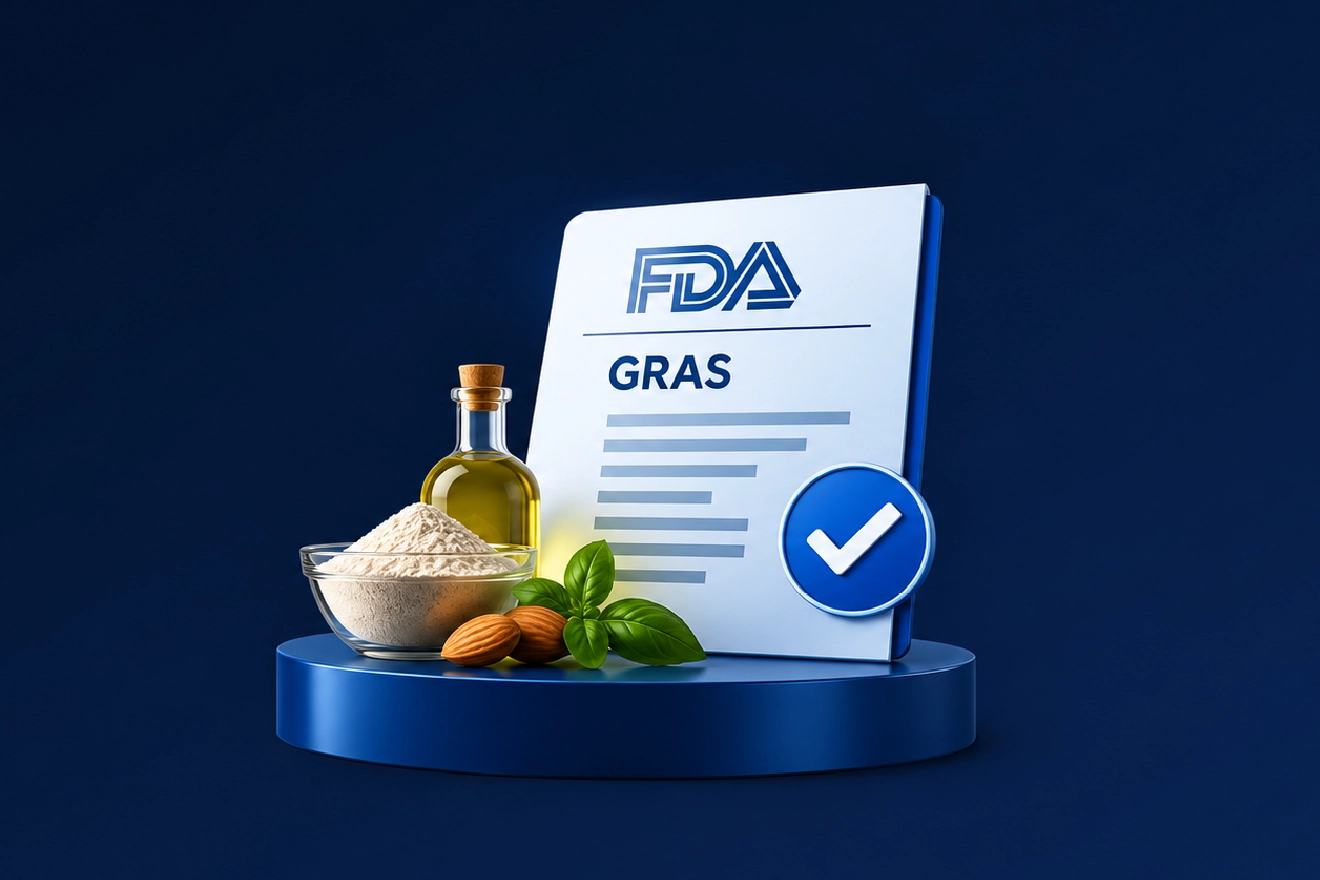
The U.S. Food and Drug Administration (FDA) has proposed a major change to the way Generally Recognized as Safe (GRAS) substances are notified in the United States.
Published on August 11, 2026, the proposed rule, “Substances Generally Recognized as Safe,” would replace the current voluntary FDA GRAS notification program with a mandatory notification framework for certain substances used in human and animal food.
Under the proposal, companies introducing a substance into interstate commerce under the GRAS provision would generally be required to notify the US FDA of the basis for concluding that the substance is GRAS under its intended conditions of use, unless an applicable exception applies.
For food businesses that currently rely on independent GRAS conclusions, this could mean a significant shift in how GRAS assessments, documentation, and regulatory processes are managed.
From Voluntary to Mandatory GRAS Notifications
Currently, a company may conclude that a substance is GRAS under its intended conditions of use without submitting a GRAS notice to the US FDA. Notification is voluntary.
FDA's proposal would change this approach.
If finalized, GRAS notices would generally be required for applicable uses of substances in human and animal food. The proposed mandatory system would give FDA and the public more information about substances being used in the food supply and help FDA assess whether a particular use qualifies as GRAS or instead constitutes a food additive use subject to premarket review and approval.
| Current GRAS Framework | Proposed Framework |
|---|---|
| GRAS notification is voluntary | Notification would generally be mandatory for applicable uses |
| Independent GRAS conclusions can be made without notifying the FDA | Applicable GRAS conclusions would generally need to be submitted to the FDA, unless an exception applies |
| The FDA may have limited information about independently concluded GRAS uses | The FDA would receive broader information about GRAS uses |
| Supporting information may not be submitted to the FDA | GRAS notices would provide the FDA with supporting information |
The proposal does not eliminate a company's ability to reach its own GRAS conclusion. Rather, it would require applicable conclusions to be submitted to the FDA.
Why Is the FDA Proposing This Change?
According to the FDA, the voluntary nature of the existing notification program has created information gaps around substances being introduced into the food supply.
Companies may reach independent GRAS conclusions without notifying the FDA, meaning the agency may not have information about the identity of the substance, its intended use, or the basis for the GRAS conclusion.
The FDA's proposed mandatory system is intended to address this gap by increasing the information available to the agency and the public.
The proposal is intended to help the FDA:
- Identify substances being used in human and animal food.
- Assess whether a substance's use meets the GRAS definition.
- Identify uses that may instead constitute food additive uses requiring FDA review.
- Identify potentially unsafe substances.
- Ensure GRAS conclusions have a scientific basis.
- Ensure appropriate documentation supporting GRAS conclusions exists.
- Improve transparency around substances being added to the food supply.
What Would Companies Need to Prepare?
If the proposal is finalized, companies affected by the mandatory GRAS notification requirement would need to be prepared to provide the FDA with information supporting their GRAS conclusions.
This puts greater emphasis on the quality, completeness, and organization of GRAS documentation.
The proposed framework would also introduce procedural requirements around submissions. For example, FDA proposes electronic submission of GRAS notices, with a mechanism for requesting a waiver from electronic submission.
The proposal also addresses English translations for material submitted in or referenced by a GRAS notice when that material is in a foreign language.
| Proposed Requirement | Detalles |
|---|---|
| Mandatory notification | Certain GRAS uses would need to be notified to the FDA |
| Electronic submission | GRAS notices would generally be submitted electronically through the FDA's Centralized Online Submission Module (COSM), unless a waiver is granted |
| English translations | Foreign-language material submitted in or referenced by a GRAS notice would require an accurate and complete English translation |
| Public disclosure | Information in a GRAS notice would generally be subject to FDA's public disclosure requirements, including disclosure of information in the notice as provided under the proposed rule and applicable FOIA provisions |
| FDA evaluation | The FDA would evaluate the information supporting the GRAS conclusion and may communicate questions to the notifier during its evaluation |
For businesses, this means that GRAS readiness may extend beyond the scientific conclusion itself to the way supporting regulatory information is maintained and prepared for submission.
A GRAS Notice Is Not FDA Approval
One important point for businesses is that submitting a GRAS notice does not mean the FDA has approved the substance.
The proposal maintains the distinction between a company's GRAS conclusion and the FDA's assessment of that conclusion.
FDA may determine that a submitted notice does not provide an adequate basis for the GRAS conclusion. FDA may also determine that the use does not qualify as GRAS and instead represents a food additive use requiring FDA review and approval.
Under the existing notification process, FDA generally responds to a filed GRAS notice in one of three ways:
- FDA indicates that it has no questions regarding the basis for the GRAS conclusion.
- FDA indicates that the notice does not provide a sufficient basis for the GRAS conclusion.
- FDA grants a request from the notifier to cease its evaluation of the notice.
The proposed FDA GRAS notification requirements would build on this framework while making notification itself a requirement for applicable uses.
Importantly, the proposed rule would establish specific FDA review timeframes. FDA proposes an initial evaluation within 45 days of receiving a GRAS submission to determine whether to file it as a GRAS notice. If filed, the FDA proposes responding within 180 days of filing, with the ability to extend the evaluation period by 90 days up to two (2) times. This means the proposed evaluation period could extend to 360 days, excluding the initial 45-day filing evaluation.
What About Existing Independent GRAS Conclusions?
This could be particularly relevant for businesses that have already introduced substances into interstate commerce based on independent GRAS conclusions.
FDA's proposal includes a time-limited option for certain substances already introduced into interstate commerce under the GRAS provision before the effective date of the final rule. Rather than initially submitting a GRAS notice, eligible companies could make a streamlined submission containing specified information, including evidence that the substance was present in interstate commerce before the final rule's effective date..
This gives companies with existing GRAS positions an important reason to review their portfolios now.
Businesses should consider identifying:
| Area to Review | Key Question |
|---|---|
| GRAS inventory | Which substances are currently marketed based on GRAS conclusions? |
| Basis of conclusion | Was the GRAS conclusion independently reached or previously notified to FDA? |
| Uso previsto | Does the current use match the conditions supporting the GRAS conclusion? |
| Supporting documentation | Is the scientific and regulatory information readily available? |
| FDA interactions | Are there existing GRAS notices or FDA communications relevant to the substance? |
| Potential pathway | Could the substance qualify for a proposed exception or the streamlined submission option for certain substances already in interstate commerce? |
This type of portfolio review can help companies understand where potential regulatory work may arise if the proposal becomes final.
Proposed Exceptions to Mandatory GRAS Notification
FDA is not proposing that every GRAS-related use would automatically require a new GRAS notice.
The proposal identifies certain categories of exceptions from the notification requirement, including provisions addressing existing FDA determinations and certain uses already covered by specified regulatory pathways.
The proposed exceptions include, among other circumstances, uses covered by an FDA “no questions” letter, substances listed or affirmed as GRAS under applicable regulations, certain uses considered GRAS under specified regulatory provisions, certain uses previously considered by FDA through an established process, applicable Threshold of Regulation exemptions, certain uses covered by an effective Food Contact Notification (FCN), and certain substances covered by the proposed streamlined submission pathway.
It also proposes a time-limited streamlined submission option for certain substances already in interstate commerce.
Because these provisions are tied to specific conditions, companies should assess each substance and intended use individually rather than assuming that an existing GRAS position will automatically be exempt.
What Is the Proposed Timeline?
The FDA proposed GRAS notification rule is not yet final, meaning the requirements are still under review.
| Hito | Proposed Timing |
|---|---|
| Proposed rule published | August 11, 2026 |
| Public comments due | December 9, 2026 |
| Proposed final rule effective date | 60 days after publication of the final rule |
| Proposed compliance period for mandatory notification requirements | 18 months after the final rule's effective date |
| Proposed compliance period | 18 months after the final rule's effective date |
| Streamlined submission option | One year from the final rule's effective date |
| Initial FDA filing evaluation | Within 45 days of receiving the submission |
| FDA proposed evaluation period after filing | 180 days, with up to two 90-day extensions |
The December 9, 2026 deadline applies to comments on the proposed rule and the related information collection.
It is important to distinguish the proposed compliance period from FDA's proposed review timeline. The 18-month period is intended to provide industry time to comply with the new notification requirements; it is not an FDA review period. For GRAS notices, the proposed FDA review framework would provide an initial 45-day filing evaluation followed, if the submission is filed as a GRAS notice, by a proposed 180-day evaluation period that FDA could extend by 90 days up to two times.
What Should Food Businesses Do Now?
Although the proposed rule is not yet a compliance requirement, reviewing the GRAS notification requirements for food businesses can help companies identify potential gaps in their current GRAS assessments, documentation, and regulatory processes.
- Build a GRAS Inventory
Identify substances currently marketed based on GRAS conclusions and determine how each conclusion was established. - Review Intended Conditions of Use
Assess whether the substance's current use remains consistent with the conditions supporting the GRAS conclusion. - Assess Supporting Documentation
Review the scientific and regulatory information supporting each GRAS conclusion and identify potential gaps before a notification may be required. - Review Existing FDA Records
Identify existing GRAS notices, FDA responses, or other relevant FDA interactions associated with the substance. - Assess Potential Notification Needs
Determine which substances could potentially be subject to the mandatory GRAS notification requirements and whether an exception may apply. - Prepare Regulatory Processes
Companies with multiple GRAS substances may benefit from establishing a structured process for managing GRAS documentation, assessments, submissions, and ongoing regulatory requirements. - Assess Existing Interstate Commerce Evidence
For substances already marketed under an independent GRAS conclusion, companies should consider whether they have adequate evidence demonstrating that the substance was introduced into interstate commerce before the effective date of a final rule, as this evidence would be relevant to the proposed streamlined submission option.
How Freyr Can Support GRAS Readiness
The potential move toward mandatory GRAS notifications makes regulatory readiness increasingly important for food businesses.
Freyr can support companies in assessing their GRAS portfolios and preparing for potential notification requirements through:
- GRAS regulatory assessment to evaluate existing GRAS positions and intended uses.
- GRAS documentation review to assess available scientific and regulatory information.
- GRAS notification preparation to organize and prepare information for FDA submission.
- Regulatory strategy support to help companies assess the appropriate regulatory pathway for their substances.
- Portfolio assessment for businesses managing multiple GRAS substances or products.
- Ongoing regulatory support to help companies monitor and respond to changes affecting their GRAS strategy.
For businesses that have historically relied on independent GRAS conclusions, starting with a portfolio assessment can help establish which substances may require further attention under the proposed framework.
Get Ready for Potential Changes to the US FDA GRAS Framework
The US FDA's proposal could mark an important change in the U.S. GRAS landscape.
The move from voluntary to mandatory notification would give FDA greater visibility into substances being introduced into human and animal food and provide additional information to assess the scientific basis and documentation supporting GRAS conclusions.
For food businesses, the priority right now is assessment and preparation.
Reviewing existing GRAS conclusions, intended conditions of use, supporting documentation, and potential notification requirements can help companies better understand how the proposed rule could affect their products.
Businesses should also consider documenting existing market presence and reviewing the applicability of proposed exceptions and the streamlined submission pathway, particularly for substances currently marketed on the basis of independent GRAS conclusions.
Freyr can help you assess your GRAS portfolio and prepare for potential changes to US FDA's GRAS notification framework.
Talk to Freyr about your GRAS regulatory requirements.
Note: This article is based solely on the FDA's proposed rule “Substances Generally Recognized as Safe,” published in the Federal Register on August 11, 2026. The proposed FDA GRAS requirements may change before a final rule is issued.