Consulta


6 min di lettura
At Freyr One USA 2026, Suren Dheenadayalan, CEO of Freyr Solutions, shared his insights on a key question many life sciences organizations are currently grappling with: regulatory workloads are rising, budgets are not, and AI promises to close the gap, so why is so little of that promise turning into real value?
Spanning topics such as enterprise AI adoption, defensible AI, AI-native platforms, regulatory intelligence, and post-approval management, his keynote revealed a recurring theme: AI in regulatory affairs will not deliver at scale through isolated pilots. It needs an enterprise operating model built on domain knowledge, digital foundations, and connected data.
Why AI in regulatory affairs is not yet delivering at scale
Almost every regulatory team today is experimenting with AI. There are pilots, chatbots, and copilots everywhere. Suren asked the room whether they believed AI could really help the industry do more with less. His own answer, based on the evidence, was: not yet.
He pointed to recent research from MIT, McKinsey, KPMG, and Gartner. Each says it differently, but the message is the same. Most AI initiatives are not producing real enterprise value, and life sciences is among the slowest industries to benefit.
Meanwhile, the pressure keeps building. New products, new indications, new markets, and constantly changing regulations all mean more regulatory work, with no matching increase in budget. So the question, Suren said, is no longer whether to use AI. It is what it takes to make AI work at scale. His answer came from three places: Freyr’s innovation councils with customers, its multi-year AI programs with large enterprises, and Freyr’s own journey to becoming an AI-native company.
Think enterprise, not point automation
The first lesson was about where AI is applied. Many early projects automated a single task. That task got faster, but if it was one step in a long, slow process, the process stayed just as slow. Speeding up one step, he said, does not make a slow process agile.
The second lesson was about where AI lives. When AI sits outside the system of record, people copy its outputs back in by hand. That adds little value and creates traceability and compliance problems.
The third lesson was about consistency. When every regulatory professional uses their own AI tools, two people doing the same task can get two different answers. Shared prompts and skills, governed across the enterprise, are what make results consistent and repeatable. In short: think enterprise.
Make regulatory AI defensible
In regulatory work, an answer is only useful if you can defend it. That, Suren explained, is why the difference between probabilistic and deterministic AI matters so much.
Most AI models are probabilistic. Ask the same question twice and the model may take twenty steps to answer the first time and fifteen the next. That is fine for a recommendation. It is not fine for a regulatory decision. For those, he said, you need deterministic results, which means recording every step the AI takes so that the work can be checked, audited, and repeated.
He also shared a lesson from a real project. A tool was built as a non-GxP system, until the team realized its output was feeding another process that was GxP. The development approach had to change midway.
Validation follows the same logic. If a probabilistic output is only an input to human work, it may pass when it is right seven times out of ten. A deterministic output must be right every time. Governance should start strict and ease as the AI proves itself.
Start with AI in the loop
Defensibility also changes how people and AI should work together. Everyone talks about human in the loop, where AI does the work and people check it. For complex regulatory processes, Suren said, the reality today is the opposite: AI in the loop. People run the process across regulatory, labeling, artwork, and compliance teams, and AI helps at the right steps. As trust in the outputs grows, that balance can shift.
Domain, digital, and data: the AI-native operating model
So what does the next-generation regulatory enterprise look like? Suren described it in three words: domain, digital, and data.
Domain is the knowledge spread across regulatory, safety, labeling, artwork, and compliance teams, each with its own context. Digital is the platform underneath. Four or five years ago, before ChatGPT, Freyr hired a CTO from the telecom industry whose first advice was to throw out the legacy systems and build AI-native. “It was not an easy thing,” he said, but that decision became Freya Fusion. Data brings internal and external information together.
What connects all three is knowledge. Every company, and often every market, uses different names for the same thing. For years, the industry tried to standardize them all. “We were trying to play God,” Suren said. A knowledge graph takes a simpler route. It records that these names mean the same thing, so AI understands every version.
His practical advice for getting started: you don’t need to move all your data first. Catalog what you already have, then classify and tag it by product, market, and document type.
Regulatory intelligence: start from the outside in
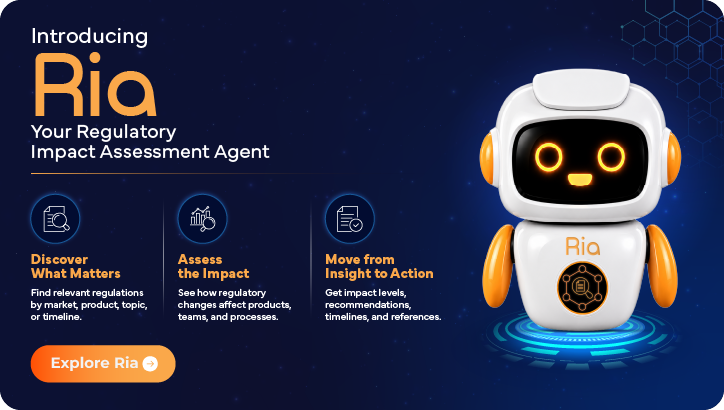
External data, he argued, is one of the industry’s most underused assets. Health authorities publish new regulations, guidance, and notices constantly, some almost weekly. When that information is connected to your own product data, AI can show which products and markets each change affects, as it happens.
He described one example in which AI reads a deficiency letter, checks it against a company’s portfolio, processes, and SOPs, and recommends what to do next. Starting with external data, he added, can also make AI adoption easier inside an organization.
Four areas where transformation can happen at scale
Freyr is focusing on four areas where an AI-native model can deliver real gains:
- External intelligence: real-time impact analysis of any regulatory change.
- Post-approval change management: the industry’s “holy grail,” where a constant stream of CMC, labeling, and artwork changes drives submissions.
- A regulatory Workbench: one window to the context, people, and activities each person needs, instead of waiting on emails.
- AI-native regulatory services: Freyr’s own goal of turning 15 to 20% of its workforce into digital experts.
Across all four areas, Suren was careful not to overpromise. When asked whether the industry has proven efficiency numbers yet, he said, “I don’t think so,” at least not at scale. The value, he explained, comes where the volume is: many submissions, many changes, many people. That is exactly why isolated point automations disappoint, and why enterprise approaches are worth the effort.
Looking ahead: regulatory excellence as a strategic advantage
That brought him back to the question he started with. If AI is going to help regulatory teams do more with less, it has to be built for the enterprise, defensible by design, and grounded in connected data. Get that right, and the payoff goes well beyond efficiency. “Regulatory excellence is a strategic advantage,” Suren said. It decides how soon a product reaches a new market, how quickly a post-approval change closes, how confidently a company faces an audit, and, ultimately, how fast safe products reach patients.
Build your AI-native regulatory operating model with Freya Fusion. Freya Fusion brings regulatory data, workflows, and AI agents together on one AI-native platform. Explore Freya Fusion and see what it can do for your regulatory operations.