Consultar

6 min de leitura
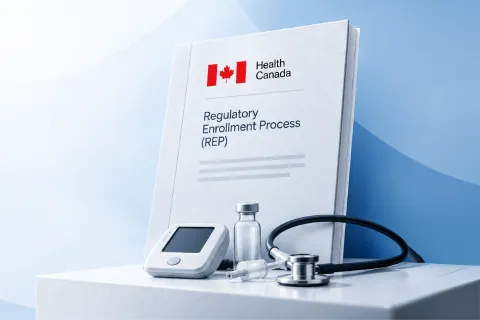
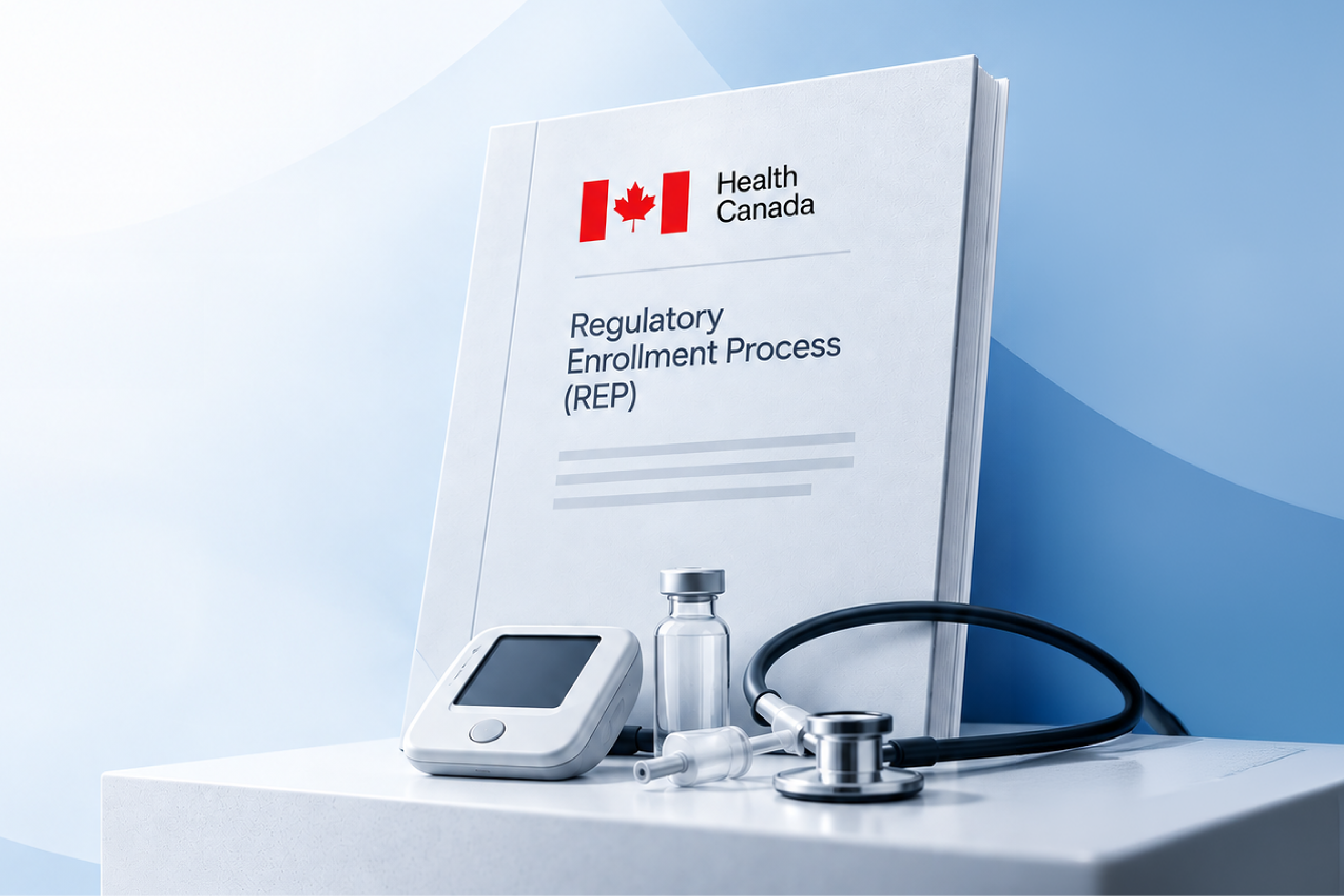
For medical device manufacturers seeking or maintaining market access in Canada, regulatory submission readiness under the Health Canada Regulatory Enrolment Process (REP) now extends beyond completing the technical dossier.
Effective April 1, 2026, the Health Canada REP mandatory date for medical devices within the applicable scope Health Canada requires the Regulatory Enrolment Process (REP) and FDA Common Electronic Submissions Gateway (CESG) for specified medical device regulatory transactions. Covered submissions must also follow the applicable International Medical Device Regulators Forum (IMDRF) Table of Contents (ToC) structure.
The change is more than a transition from conventional forms to XML-based regulatory information. Under the regulatory enrolment process (REP), a technically complete dossier may still not be filing-ready if company information, regulatory identifiers, transaction metadata, publishing requirements, validation, or CESG access are incomplete.
The strategic implication is clear: REP moves submission readiness upstream. Manufacturers must now align regulatory evidence, structured regulatory information, and electronic submission operations before the intended filing date.
What Is the Health Canada Regulatory Enrolment Process?
The Health Canada Regulatory Enrolment Process (REP) is a structured mechanism for collecting information about companies, dossiers, devices, regulatory activities, and individual transactions. Health Canada uses web-based templates to generate XML files that accompany applicable medical device submissions.
The core REP elements include the Company (CO) template, Dossier ID request form, Regulatory Transaction (RT) template, and Application Information (AI) template. Together, they identify the organization submitting the transaction, the regulatory dossier to which it belongs, and the type of activity being filed.
REP does not replace the evidence required for a Medical Device Licence (MDL). Instead, it standardizes how regulatory and administrative information is structured, linked, and transmitted to Health Canada.
Which Medical Device Transactions Require REP?
Mandatory REP currently applies to specified Class II, III, and IV medical device transactions, including new licence applications, Health Canada medical device licence amendment REP transactions, minor-change amendments or faxbacks, private-label licence applications and amendments, and certain regulatory responses.
Health Canada currently excludes Investigational Testing Applications (ITAs), Medical Device Establishment Licence (MDEL) applications, Special Access Program applications, and devices regulated under Part 1.1 of the Medical Devices Regulations from mandatory REP. The applicable scope is detailed in Health Canada’s mandatory REP notice for medical devices.
This distinction is important because REP applicability depends on the regulatory activity being performed, not simply on whether a product is a medical device.
How Does the Health Canada REP Submission Process Work?
REP readiness begins before the final dossier is transmitted. For manufacturers assessing how to prepare for Health Canada REP submission, four core elements should be addressed as part of the process:
- Company ID
- Dossier ID
- RT XML
- AI XML
Company ID
Organizations must ensure that their company enrolment information is current and that the appropriate Company ID and Contact IDs are available. The Company ID identifies the organization interacting with Health Canada and supports the regulatory information associated with applicable REP transactions.
Dossier ID
For a new dossier, the manufacturer must also obtain a Dossier ID, which identifies the regulatory dossier associated with the lifecycle of a medical device licence. Understanding Health Canada Dossier ID vs Company ID is important: the Company ID identifies the organization, while the Dossier ID identifies the specific regulatory dossier. Health Canada describes these requirements in its REP process guidance.
RT XML
Each REP regulatory transaction requires an RT XML, which captures transaction-level information. A regulatory transaction can include, for example, the initial filing of a new Medical Device Licence application or amendment, a response to a Screening Deficiency Letter or other request for additional information, or another subsequent transaction associated with an existing REP dossier.
AI XML
An AI XML is required for specified initial transactions, including new Class II–IV licence applications, amendments, and private-label activities, and may need to be updated when previously submitted application information changes.
The key operational risk is inconsistency. Dossier IDs, regulatory activity types, RT and AI information, cover letters, and dossier content must align.
REP, IMDRF ToC and CESG: How Do They Work Together?
REP, IMDRF ToC, and CESG serve different but connected purposes. Understanding the difference between REP and CESG Health Canada requirements is important: REP structures the regulatory transaction, IMDRF ToC organizes the dossier, and CESG transmits the submission electronically.
Health Canada requires REP transactions to be transmitted through CESG, making gateway readiness an integral part of submission planning. Its CESG transmission guidance outlines the applicable requirements.
This interconnected model means that completing REP files alone does not make an application filing-ready. Content, structured data, publishing, validation, and transmission must all be aligned.
Where Can Manufacturers Run into REP Submission Issues?
REP creates operational dependencies that may affect filing timelines even when the underlying technical dossier is complete.
Incorrect dossier information, inconsistent transaction details, missing REP files, incorrect XML naming, improper folder placement, outdated templates, or failed validation can result in avoidable submission friction. Manufacturers should therefore ensure compliance with applicable Health Canada REP naming conventions and folder structure requirements.
Manufacturers should also use current versions of REP templates when preparing regulatory transactions.
The important lesson is that REP should not be treated as a final publishing task. It requires coordination across regulatory strategy, regulatory operations, dossier publishing, information governance, and electronic filing.
Three Layers of REP Submission Readiness
A practical way to assess REP readiness is through three connected layers. Regulatory readiness concerns the medical device classification, regulatory pathway, supporting evidence, and applicable IMDRF ToC documentation. Information readiness covers company details, Company IDs, Dossier IDs, RT and AI data, and lifecycle consistency. Operational readiness addresses publishing, technical validation, and CESG transmission.
This framework changes the traditional submission-planning question from “Is the dossier finished?” to “Is the complete regulatory transaction filing-ready?”
For manufacturers managing multiple products, licences, and lifecycle changes, the distinction becomes increasingly important. REP reinforces the need to manage regulatory identifiers, device data, dossiers, submissions, and approvals as connected regulatory information rather than isolated documents.
Conclusion: From REP Compliance to Filing Readiness
Health Canada’s mandatory Regulatory Enrolment Process represents more than a new electronic filing mechanism. It creates a regulatory environment in which technical documentation, structured information, identifiers, IMDRF ToC publishing, validation, and CESG transmission must function as one coordinated process.
For medical device manufacturers, the central takeaway is that dossier completion is now only one layer of filing readiness. Organizations that address REP requirements early can reduce preventable operational delays and manage Canadian medical device submissions more effectively across the product lifecycle.
Freyr supports medical device manufacturers across Health Canada medical device registration, regulatory strategy, dossier preparation, regulatory publishing, submission management, and regulatory information management.
For organizations preparing Canadian medical device applications or adapting regulatory operations to mandatory REP, Freyr can support readiness across the submission pathway from regulatory data and dossier preparation through publishing and electronic submission.
Speak to a Freyr expert to assess your Health Canada REP readiness and prepare a compliant, filing-ready pathway to the Canadian market.